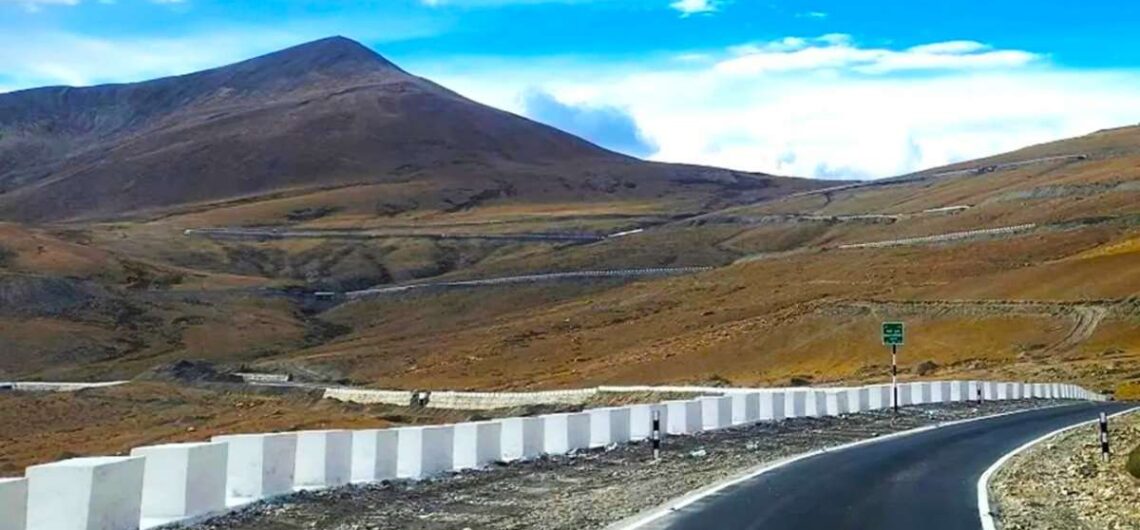
The 91-km-long Hanle-Chumar road has been thrown open for tourists. Chumar (Chumur), a nomadic village and a strategic point for Indian Army, is very close to India-China border.
Tourists can now travel from Hanle to Tso Moriri lake via Chumar and Salsa La pass. This new road journey through the beautiful landscapes will become a new tourist attraction.
The Border Roads Organisation (BRO) has completed the construction of this road and the road is now black topped. The road starting from Hanle passes through Salsa La pass, Ryul Tso lake, Chilling Tso Lake, and Chumar (Chumur) before reaching Tso Moriri lake.
Most Popular Ladakh Tours


6 Nights 7 Days Leh Ladakh Tour Package

Complete Ladakh with Hanle and Siachen (10 nights 11 days)

Kashmir and Ladakh Sightseeing Package - 10 Nights 11 Days

Leh Ladakh Tour Package with Hanle and Umling la pass (8 days)

Leh Ladakh Package for 9 Nights and 10 Days

Leh Ladakh Winter Tour Package for 5 Nights 6 Days

Leh Ladakh Luxury Tour Package (6 Nights 7 Days)


Leh Ladakh Winter Tour Package (6 Nights 7 Days)

Delhi - Manali - Leh Ladakh - Srinagar Jeep Safari (Road Trip)

Ladakh Package for 8 Nights and 9 Days


Manali-Shinkula pass- Gonbo Rangjon Tour Package from Delhi

Ladakh Package for 10 Nights and 11 Days
Delhi Manali Ladakh Package for 8 Nights and 9 Days

Srinagar Ladakh Manali Delhi Jeep Safari (10 Nights 11 Days)

Ladakh Package for 3 nights and 4 days


Delhi Manali Leh Srinagar Delhi Jeep Safari - 15 Days

Zanskar Valley with Leh Ladakh Tour Package for 11 Days

Zanskar Valley Tour Package from Delhi (7 Nights 8 Days)

Ladakh Package for 4 Nights and 5 Days with Nubra and Pangong

Ladakh Package for 4 Nights and 5 Days

Jammu - Srinagar -Ladakh -Manali -Delhi Jeep Safari

Ladakh Package for 7 Nights and 8 Days
Srinagar Leh Ladakh Manali Delhi Jeep Safari (11 Days)
Srinagar Ladakh Srinagar Package for 8 Nights 9 Days


Srinagar Leh Ladakh Srinagar Package for 8 Nights 9 Days

Delhi Manali Ladakh Manali Delhi Jeep Safari Package

Zanskar Valley Tour Package with Phugtal Monastery

Leh Ladakh Tour Package from Jammu for 8 nights 9 days

Srinagar - Ladakh - Srinagar Jeep Safari (Road Trip)

Leh Ladakh Tour Package from Manali (11 Nights 12 Days)

Leh Tour Package for 5 Nights 6 Days

6 nights 7 days Leh Ladakh Tour Package with Tso Moriri

Kargil Tour Package with Nubra and Pangong Lake

Zanskar Valley Tour Package from Manali (with Leh Ladakh)

Leh Manali Delhi Jeep Safari | Leh to Manali by Road

Nubra Valley and Pangong Lake Tour Package (5 Nights 6 Days)

Amritsar Manali Leh Bike Tour


Complete Leh Ladakh Tour Package from Srinagar

Srinagar - Ladakh Jeep Safari/Road trip - 8 Days

Pangong Lake Tour Package in Leh Ladakh


Manali Ladakh Manali Road Trip Package

Manali Leh Bike Tour (7 Days)

Manali Leh Ladakh Manali Bike Tour (12 Days)

Leh Srinagar Road Trip Package

5 Star Luxury Hotel Leh Ladakh Tour Package (5 Nights 6 Days)

2 nights 3 days leh ladakh tour package

Ladakh Tour Package with Mig La Pass (8 Nights 9 Days)

Delhi-Manali- Leh Ladakh -Zanskar- Delhi Tour Package by Road


Complete Zanskar Valley Tour Package from Leh (8 Nights 9 Days)

Budget Leh Ladakh Tour Package (5 Nights 6 Days)

4 Nights 5 Days Leh Ladakh Winter Tour Package

Ladakh with Kashmir Sightseeing Tour Package (11N 12D)

Leh Ladakh Photography Tour Package for 8 Nights 9 Days

7 Nights 8 Days Leh Ladakh Winter Tour Package
According to Indian Army, “A 91 km road connecting Hanle to the border village of Chumar (Chumur) constructed by the Border Roads Organisation has been opened for the public in Ladakh. The route traverses extreme high altitudes from 14,500 to 17,200 feet, including the high Salsa La Pass.”
It further states that the road while providing strategic connectivity for the Armed Forces along the borders, will also facilitate local connectivity and tourism in the region by connecting attractions including Hanle Observatory, Kyun Tso Lake, Chilling Tso Lake and onward to Tso Moriri.
HANLE–CHUMAR ROAD OPENS FOR THE PUBLIC
A 91 km road connecting Hanle to the border village of Chumar constructed by #ProjectHimank of the Border Roads Organisation, #BRO has been opened for the Public in Ladakh. The route traverses extreme high altitudes from 14,500 to 17,200… pic.twitter.com/C9uNfLAiBg
— ADG PI – INDIAN ARMY (@adgpi) September 23, 2025
Alternative connectivity between Hanle and Tso Moriri
This road has provided alternate connectivity to both Tso Moriri lake and Hanle. Now people, including tourists can travel from Hanle to Tso Moriri by this new road and similarly from Tso Moriri to Hanle.
Two new high altitude lakes in Ladakh
This road will provide an opportunity to explore two new lakes — Ryul Tso (or Kyun Tso) lake and Chilling Tso lake.
Ryul Tso, also known as Kyun Tso, is a high-altitude, brackish water lake in the Changthang region of Ladakh along Hanle-Chumar road, part of a pair of twin lakes with Chilling Tso. Located near the India-China border, it’s known for its stunning, surreal blue waters and a remote, pristine wilderness setting with grazing grounds.
The lakes were in a restricted area with rugged, remote roads, making the journey challenging and accessible mainly to experienced drivers or bikers. But now tourists will be able to visit both the lakes.
Main attractions near Hanle – Chumar (Chumur) road
Chumar has a small monastery, some old houses, which will become a small stopover for travellers. Ryul Tso lake and Chilling Tso lakes will be added attraction besides Salsa La pass. Popular Tso Moriri lake and Hanle, and Umling La pass can make it a 3-day trip
Another high mountain pass to become tourist attraction
As Ladakh is known as land of High Passes, the 17,000ft high Salsa La pass will be another pass to be explored by the tourists. There are many popular high motorable passes in Ladakh including Khardungla, Chang La, Umling La, Marsimik La, Rezang La, Tsaga La, Taglang La, Nakila, Wari La, and many more.
Currently 5,798 m (19,024 feet) high Umling la pass is the highest motorable pass not only in Ladakh but in the world. However, Ladakh’s Mig La pass at 19,400 ft will soon become the highest motorable pass in the world.
Popular Leh Ladakh Tour Packages
5 Star Luxury Hotel Leh Ladakh Tour Package (5 Nights 6 Days)
Delhi – Manali – Leh Ladakh – Srinagar Jeep Safari (Road Trip)
Ladakh Package for 4 Nights and 5 Days with Nubra and Pangong
Leh Ladakh Tour Package with Hanle and Umling la pass (8 days)
Hanle–Chumar Road: The Remote Adventure Route in Ladakh
If you are someone who loves exploring offbeat destinations in Ladakh, the Hanle–Chumar Road should be on your list. Stretching through some of the most remote, untouched, and starkly beautiful landscapes of Changthang in eastern Ladakh, this road connects Hanle village, famous for the Indian Astronomical Observatory, with Chumar, a border settlement near India-China border and Himachal Pradesh.
Location and Route
-
Hanle is located about 250 km from Leh and is one of the highest permanently inhabited villages in Ladakh, known for its clear skies and observatory.
-
Chumar (Chumur) lies further southeast, close to the Indo–China border, and is mostly visited by adventure travelers and defense personnel.
-
The 91-km long Hanle–Chumar Road passes through vast high-altitude plains, grazing pastures of nomads, and stretches of wilderness where you may not see another vehicle for hours.
Permits and Restrictions
-
Both Hanle and Chumar fall under sensitive border regions. Tourists need Inner Line Permits (ILP) from the online website/Leh DC office to travel here.
-
This is so far unclear whether foreign nationals will be allowed on Hanle-Chumar route due to proximity to the border or not. If allowed, they will need Protected Area Permits (PAP).
-
Even with permits, access to Chumar (Chumur) sector may be restricted depending on security conditions. Always check the latest updates before planning.
Highlights of the Hanle–Chumar Road
-
Hanle Observatory – One of the world’s highest astronomical observatories.
-
Changthang Plains – Remote high-altitude plateau with dramatic scenery.
-
Nomadic Life – Glimpse of the Changpa nomads with their pashmina goats and yak herds.
-
Wildlife – Spotting of snow leopards, kiangs, black-necked cranes, and Himalayan foxes in the wilderness.
-
Unexplored Landscapes – Unlike Pangong or Nubra, this area remains untouched by mass tourism. Tourists can explore least visited twin lakes.
Best Time to Travel
-
May to September is the best time, when roads are open and weather is comparatively mild.
-
Winters may make the area inaccessible for civilians due to heavy snow and extreme temperatures dropping below -20°C due to safety reasons.
Travel Tips for Hanle–Chumar (Chumur) Road
-
Carry extra fuel, food supplies, and water—there are no facilities on the route.
-
Travel with a local driver or guide familiar with the terrain.
-
Start early in the day to avoid being stranded in case of weather changes.
-
Keep buffer days in your itinerary since conditions can change rapidly.
-
Respect the fragile ecosystem and do not disturb wildlife or litter.

Comments