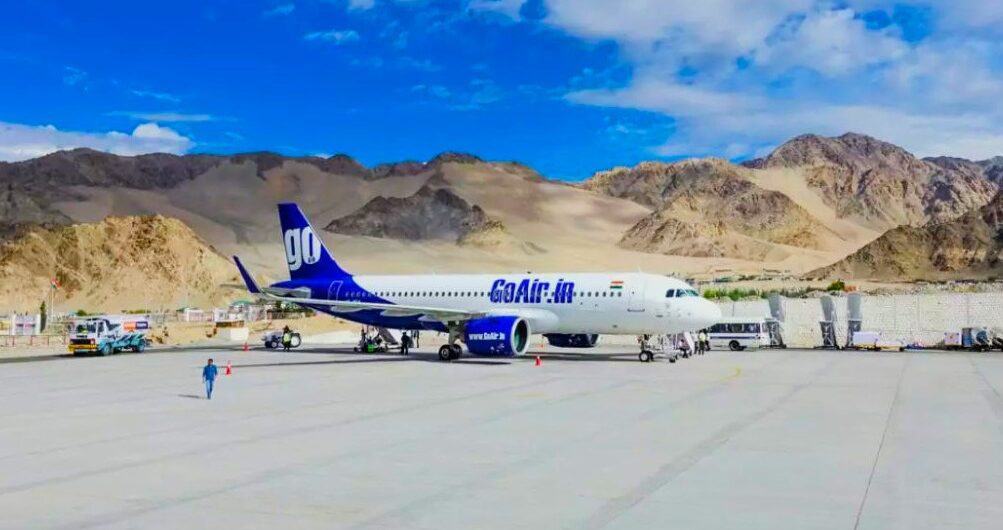
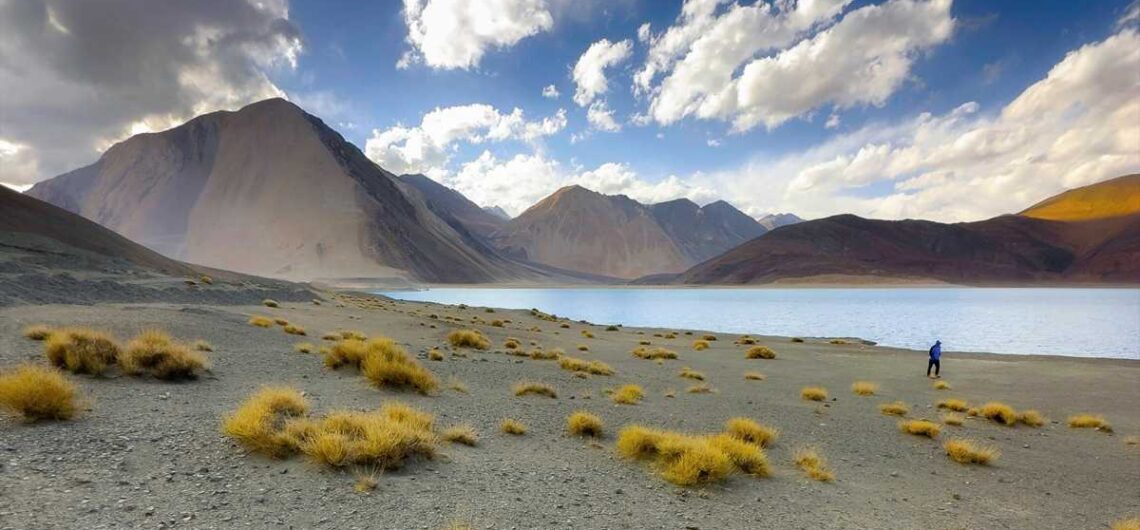
The cancellation of GoAir (Go First) flights has had a significant impact on tourism in Ladakh as thousands of hotel bookings have been cancelled or postponed. With GoAir (Go First) being one of the major airlines connecting Ladakh to other parts of India, the sudden cancellation of their flights has disrupted travel plans for many tourists. Ladakh, known for its breathtaking landscapes and unique cultural heritage, attracts a large number of tourists each year. However, the limited accessibility to the region makes air travel crucial for most visitors. GoAir's flight cancellations have resulted in fewer flight options, increased ticket prices, and difficulties in securing alternate arrangements. While some tourists managed to book other flights at higher airfare, many other cancelled their tour plans. The increased flight ticket cost due to the monopoly of the other airlines, middle-class tourists are not able to afford their tours to Ladakh. A ticket is costing Rs 15,000 to 30,000 from Delhi to Leh (one way). The tourists were searching for alternate ways to reach Ladakh i.e. road journey. But, the Manali-Leh highway is taking too much time in opening for tourists. On the other side, Srinagar-Leh road is blocking again and again. The road is not fully functional and is open for one-way traffic with strict timing system. The tourists are clueless about what they should do now. Tourists who had booked their trips well in advance have been left disappointed and frustrated. Many have had to cancel or postpone their plans altogether due to the lack of reliable flight options. This not only affects the tourists but also has a ripple effect on the local economy, as businesses that rely on tourism suffer from reduced footfall and revenue. Moreover, the cancellation of GoAir (Go First) flights has also impacted the reputation of Ladakh
The cancellation of GoAir (Go First) flights has had a significant impact on tourism in Ladakh as thousands of hotel bookings have been cancelled or postponed. With GoAir (Go First) being one of the major airlines connecting Ladakh to other parts of India, the sudden cancellation of their flights has disrupted travel plans for many
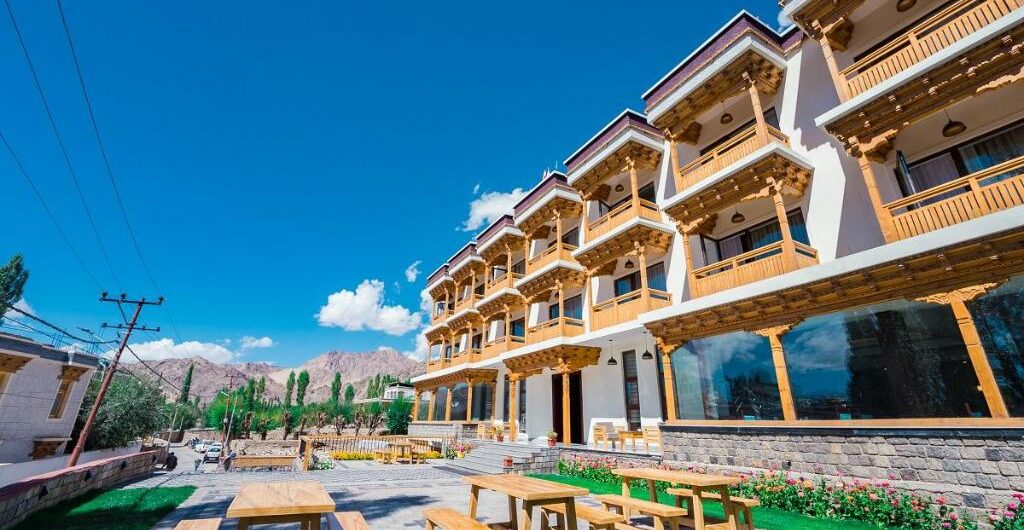
If you are visiting Leh and you are looking for a best hotel near the main market of Leh, here we shall discuss about a few good hotels that are at walking distance from the main market. We shall make a list of a few deluxe, super deluxe and luxury hotels near Leh main market. 1. Hotel Tsokar Retreat: This hotel is situated near the main bazaar in Leh, and offers spacious rooms with modern amenities. It has a multi-cuisine restaurant and a garden where guests can relax. The rooms offer mountain view. The newly built hotel Tsokar Retreat is at a walking distance from the main market of Leh. 2. Hotel Samaya: Samaya hotel is at a 3 minute walking distance from the Leh main bazaar. Established in 2021, Samaya Hotel is one of the newest yet one of the most luxurious hotels in Ladakh. The hotel has luxurious rooms with mountain views and balconies. Samaya means an unbreakable bond between two parties, that's based on the principle of: respect, trust, love, care, concern, positivity, progressive relationship, prosperity for both parties and mutual understanding. 3. Hotel Rafica: Hotel Rafica, which remains open even during winter time, is a centrally heated property with 24 deluxe rooms. This is also a hotel inear the Leh main market. 4. Kesaar Palace: This super deluxe hotel is located in the heart of the ancient town of Leh and is near the main market. The Hotel is designed traditionally, eco friendly and constructed on the lines of a Ladakhi Palace architectural built-up. Designed by famous ladakhi Interior designers. it has unique & excellent Ladakhi architectural structures known as Shingtsag and all the rooms have been provided with Raphsal ( Balcony) as you find in the Palaces around Leh Ladakh. 5. Hotel City Palace: Hotel
If you are visiting Leh and you are looking for a best hotel near the main market of Leh, here we shall discuss about a few good hotels that are at walking distance from the main market. We shall make a list of a few deluxe, super deluxe and luxury hotels near Leh main market.
Can you really see Northern lights (Aurora Borealis) in Ladakh as many photos being shared on social media have made a buzz ever since IIA Bengaluru shared a timelapse video captured by Hanle Observatory of Ladakh where red clouds can be seen in the skies of Ladakh. While most photos are old, mostly from Norway and Iceland, the IIA Bengaluru stated: “This is a time-lapse of the sky taken by a 360 deg camera from #Hanle on 22/23 April night. You can see the aurora lights due to an intense geomagnetic storm that hit the Earth. It is extremely rare to see aurora at such a low latitude! At 11:42 PM on 21 Apr the Sun launched a coronal mass ejection towards the Earth. This CME (speed of 500-600 km/s) was associated with an M1 class solar flare. The CME arrived at Earth late on April 23 at 10 PM. It further stated that This geoeffective CME led to an excellent night for auroral activity. The aurora came to lower-than-usual latitudes overnight leading to rare sightings from Europe, China & Ladakh in India. Such a severe geomagnetic storm last occurred in 2015. “For predictions of this storm as well as space weather forecasts for other solar events, check out @cessi_iiserkol Centre for Excellence in Space Sciences India at @iiserkolhttp://cessi.in According to news portal The Quint, while the first three images show the Northern Lights in Norway, the fourth one is from Iceland. While aurora-like lights were seen in Ladakh in the night between 22 and 23 April, all these photos predate the event. It further stated that none of the photos being circulated on social media belong to northern lights in Ladakh. Outlook India has written an article on northern lights in ladakh: If you're an avid stargazer, add Ladakh
Can you really see Northern lights (Aurora Borealis) in Ladakh as many photos being shared on social media have made a buzz ever since IIA Bengaluru shared a timelapse video captured by Hanle Observatory of Ladakh where red clouds can be seen in the skies of Ladakh. While most photos are old, mostly from Norway
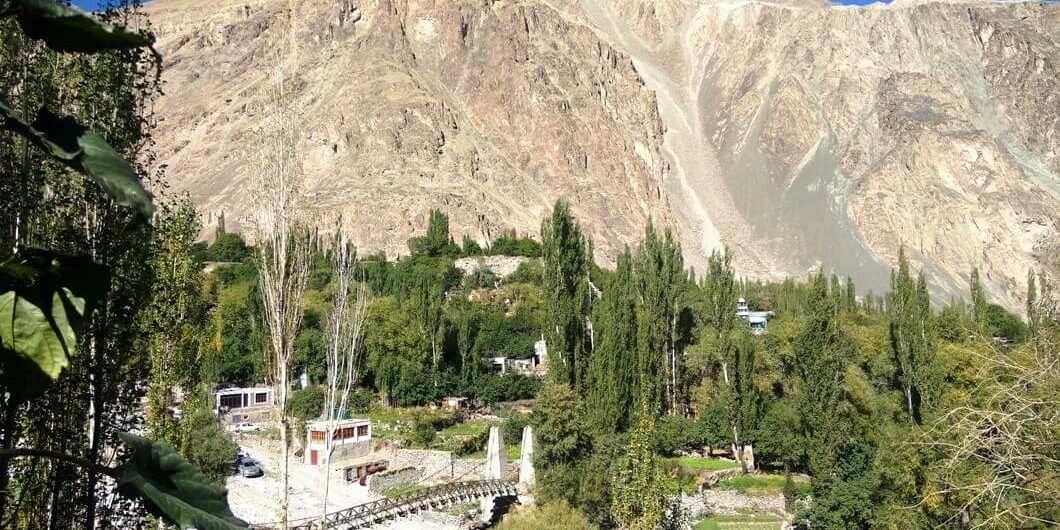
Turtuk is the northernmost village and gram panchayat of India in Nubra valley of Leh district of Ladakh, about 205km from Leh town and is on the bank of Shyok River. Turtuk opened for tourists in 2009 and it was under control of Pakistan since Independence till 1971. India took control over Turtuk during Indo-Pakistan war of 1971. India and Pakistan had again a war around Turtuk during Kargil War of 1999. Now Turtuk is one of the major tourist destinations (sightseeing places) in Ladakh. Besides Turtuk, Thang (last village near LOC) and Tyakshi have also become tourist attractions. A few memorials built in the memory of soldiers can be seen on the road leading to zero point of India-Pakistan Line of Control (LOC). Many tourists visit Turtuk village between May and October. Turtuk is a Muslim village having population of about 3,500 residents and its residents speak Baltistani, Ladakhi and Urdu languages. Siachen Glacier is also accessible from Turtuk side. Turtuk village offers beautiful views of Shyok valley. Turtuk is said to be the only place in India where one can witness Balti culture. Tourist movement is allowed till Tyakshi, another Balti village beyond Turtuk. However, Thang is the last and northernmost village of India, about 4km from Turtuk just before LOC, but tourists are not allowed to visit the village. Thang is clearly visible from Tyakshi on the other side of Shyok river. Turtuk is basically divided in three sections -- main market (small market of the village) area on the Hunder-Tyakshi road and upper main village area is divided into two by a small nullah, a tributary of Shyok river. A beautiful bridge on the nullah, joining both parts o the village, is a famous tourist point where everyone wants to get clicked. A large number of
Turtuk is the northernmost village and gram panchayat of India in Nubra valley of Leh district of Ladakh, about 205km from Leh town and is on the bank of Shyok River. Turtuk opened for tourists in 2009 and it was under control of Pakistan since Independence till 1971. India took control over Turtuk during Indo-Pakistan
What is the best time to visit Leh Ladakh? This is the question that every traveller wants to ask before planning his visit to Ladakh. Ladakh can be visited in all four seasons, 12 months a year, but depending upon the choice and fitness of traveller, one can plan tour based on the seasons. Seasons in Ladakh June to September: Summer season (Peak tourist season/Best time to visit Ladakh with family, children and elderly) (Day temperature: 20 to 25 degrees C, Night temperature: 5 to 10 degrees C) October to November: Light cold (Lean tourist season) (Day temperature: 5 to 20 degrees C, Night Temperature: 5 degrees C to -5 degrees C) December to March: Extreme cold (Leanest season/tourists visit only to experience cold/photography/adventure) (Day temperature: -5 degrees C to 5 degrees C, Night Temperature: -10 degrees C to -30 degrees C (Temperature at some places dip even below minus 30 degrees Celsius. Drass region of Ladakh is the coldest inhabited place in India and second coldest in world after Siberia) April to May: Light cold and sometime warm days but cold nights (Tourists start visiting Ladakh. Temperature starts rising to pleasant after mid-April) (Day temperature: 5 to 15 degrees C, Night temperature: -5 to 10 degrees C) The best time to visit Ladakh depends on your preferences and the activities you plan to engage in. Ladakh is known for its rugged landscapes, high-altitude passes, and unique cultural experiences. However, due to its high altitude and extreme weather conditions, the accessibility and climate vary throughout the year. Here's an overview of the different seasons in Ladakh: Summer (June to September): This is the peak tourist season in Ladakh when the weather is most favorable. The temperatures range from 20°C to 30°C (68°F to 86°F) during the day, and the region
What is the best time to visit Leh Ladakh? This is the question that every traveller wants to ask before planning his visit to Ladakh. Ladakh can be visited in all four seasons, 12 months a year, but depending upon the choice and fitness of traveller, one can plan tour based on the seasons. Seasons
On this page, we shall keep you updated about current temperature, snowfall status and weather in Leh, Kargil, Nubra Valley, Pangong Lake, Tso Moriri lake, Zanskar valley and all the places of Ladakh. January 22, 2023: Heavy snowfall is predicted from January 24 to 27 in most parts of Ladakh including Leh, Kargil and Padum. The Pangong Lake is frozen completely. The Zanskar river's surface has also turned ice at most places, forming a shape of white chadar (sheet) which means chadar treks have begun. Here are the minimum temperatures of major places in Ladakh which were above the normal due to overcast (all figures start with minus): Leh -15.2, Nyoma -17.7, Chuchot Yokma -16.0, Padum (Zanskar) -15.6, Drass -15.3, Upshi -14.3, Kargil -13.8, Tangtse -13.3, Hunder (Nubra) -8.4, Khaltse -7.1, Garkone. -6.9, April 25, 2021: The weather will remain generally dry in the next few days. Good sunshine will result in little rise in the day temperature, bringing some relief from the cold. Some cloudy weather is likely after April 30. Tourists can see snow at Khardungla pass. Leh-Srinagar road will open only for four-wheel drive light vehicles on Monday. Trucks and other heavy vehicles may have to wait for few more days as road is very slippery. The Leh-Manali road is blocked and may take up to one week to open for vehicular traffic. Updated on April 21, 2021 More snowfall in Leh, Kargil (Ladakh) Most parts of Ladakh are witnessing fresh snowfall since last 24 hours. The meteorological department, Leh, has predicted more snowfall in the next 48 hours. Overcast is predicted till april 24 and it will be a mix of sun and clouds from April 25 onwards. While peaks, including Khardungla pass and Changla pass are receiving moderate snow, Zojila pass and parts of Kargil
On this page, we shall keep you updated about current temperature, snowfall status and weather in Leh, Kargil, Nubra Valley, Pangong Lake, Tso Moriri lake, Zanskar valley and all the places of Ladakh. January 22, 2023: Heavy snowfall is predicted from January 24 to 27 in most parts of Ladakh including Leh, Kargil and Padum.
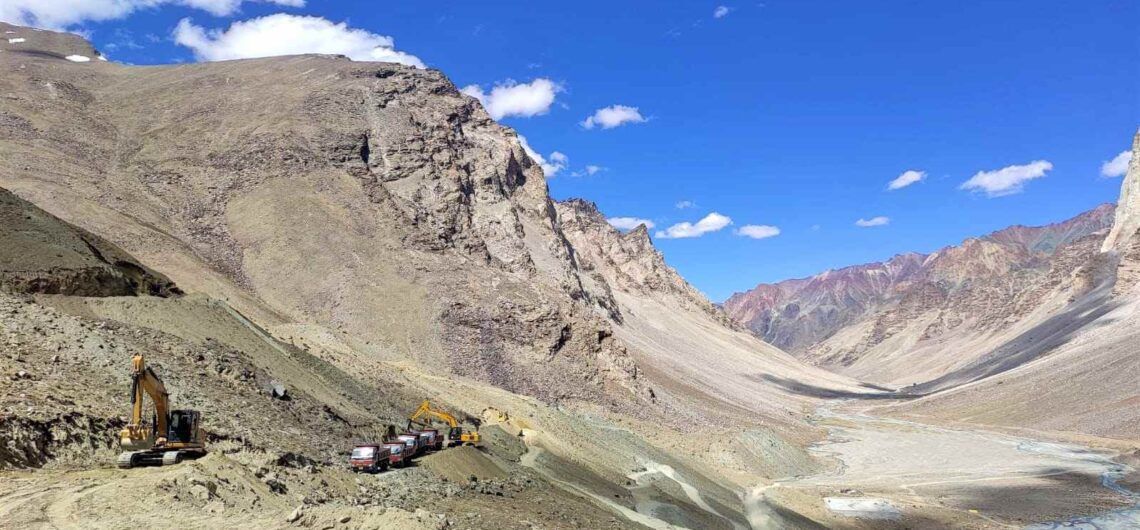
Member of Parliament from Ladakh, Jamyang Tsering Namgyal (JTN) raised the demands in Parliament for the construction of roads of Paddar-Padum, Udaipur-Padum, and Korzok-Kiato for strengthening the Indian border in the Northern region. Raising his demands under business rule 377 of the Lok Sabha, Ladakh MP Jamyang Tsering Namgyal emphasized that India has war experiences of 1948, 1962, 1965, 1971, 1999 and the Galwan conflict of 2020. Unprecedented border tussles usher the nation to develop some alternative routes to connect the border with mainstream land. Despite the commendable works on Nimo-Padum- Darcha Road including the tunnel at Shinku La and Zojila pass there is a need to focus on better, shorter, and economically more feasible roads and tunnels on priority to keep our border well secured. During the ongoing Parliament session, MP Jamyang raised demands for the construction of three major roads to connect Ladakh with the mainstream countryside in Himachal's Lahaul-Spiti district and J&K's Kishtwar for greater interest. He said there are three possibilities for building a shorter road from Kishtwar district of Jammu division to the Zanskar valley of Ladakh which are the construction of 45 km Paddar-Padum Road, Kishtwar-Atholi-Maichil- Soomchan-Zongkhul or 80 km Kishtwar-Atholi-Maichil-Dangail-Potla-Bardan’. This will be the shortest route between Northern Command and Pathankot Airforce/Military station to Ladakh as it will reduce the distance by about 150 km. This route being the shortest was also followed by the legendary Dogra General Zorawar Singh during his conquests of Ladakh and eastern Tibet in the 1830s. Construction of Udaipur-Padum Road from Miyar Valley of Himachal's Lahaul via Khanjar- Zardong-Kesar-Kang La-Padum or Khanjar-Shangkha-Thangso-Kargyak near Shinkunla Zanskar will also reduce the distance. Construction of a 100 km Road from Korzok village at Tso Moriri lake of Ladakh to Kiato in Himachal's Spiti valley will also provide easy access to eastern
Member of Parliament from Ladakh, Jamyang Tsering Namgyal (JTN) raised the demands in Parliament for the construction of roads of Paddar-Padum, Udaipur-Padum, and Korzok-Kiato for strengthening the Indian border in the Northern region. Raising his demands under business rule 377 of the Lok Sabha, Ladakh MP Jamyang Tsering Namgyal emphasized that India has war experiences
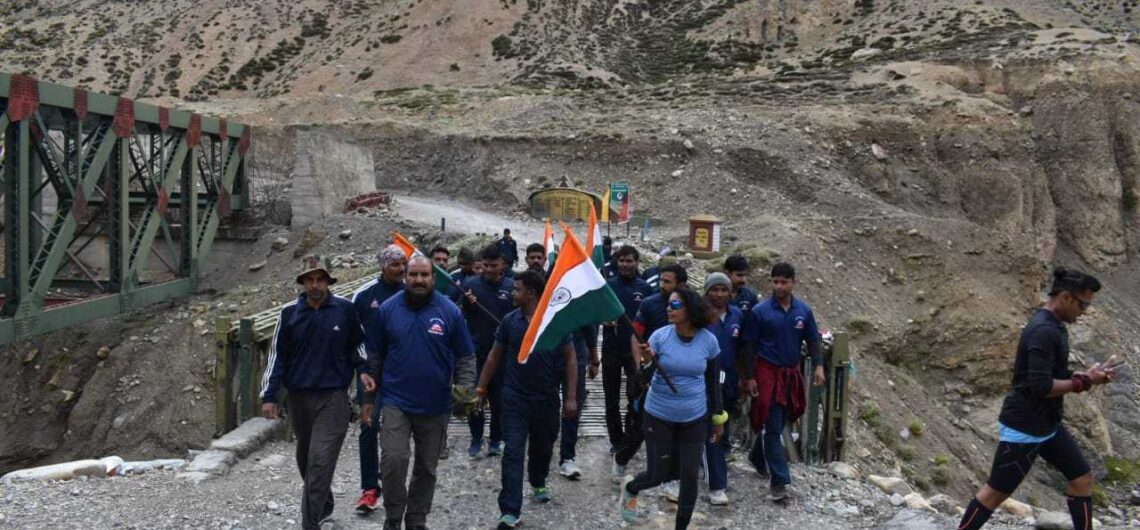
Manali-Leh highway, which has average elevation more than 12,000 feet and four major mountain passes with elevation of over 16,000 feet, has been the place for many adventure enthusiasts to set a world record. Not only Ladakh is a popular tourist destination where lakhs of tourists visit every year to enjoy the amazing landscapes, high altitude passes, ancient monasteries, unique culture and lakes, the region is also offering an opportunity to people to attempt for new records. People come here to set world records in many categories including fastest man/woman to cover the distance between Leh and Manali on foot, fastest cycling on this road, fastest car drive etc, motorbiking etc. We shall keep you updated with the latest records and attempts. Pune woman runs Leh to Manali in five days, sets new world record August 14, 2022 Pune based 45-year-old ultra runner-cum-cyclist Preeti Maske, a mother of two, created another world record to become the fastest woman on foot to run from Leh to Manali in just 4 days, 22 hours and 9 minutes. Till now the world record is held by Sufiya Khan who ran from Manali to Leh in six days. Preeti set a Guinness World Record in June this year by becoming the first woman to solo cycle from Leh to Manali in just 55 hours 13 minutes. She also holds many other records in long distance cycling. This time she attempted for Guinness record for the fastest on foot journey from Leh to Manali. With 8,000m elevation gain, runner-cum-cyclist Preeti covered a distance of 80km every day on the first four days and 100km on the last day. She was flagged off by Border Roads Organisation (BRO) from Leh at 6am on August 9 by chief engineer Brig Gaurav Karki. Given the monsoon conditions, she
Manali-Leh highway, which has average elevation more than 12,000 feet and four major mountain passes with elevation of over 16,000 feet, has been the place for many adventure enthusiasts to set a world record. Not only Ladakh is a popular tourist destination where lakhs of tourists visit every year to enjoy the amazing landscapes, high
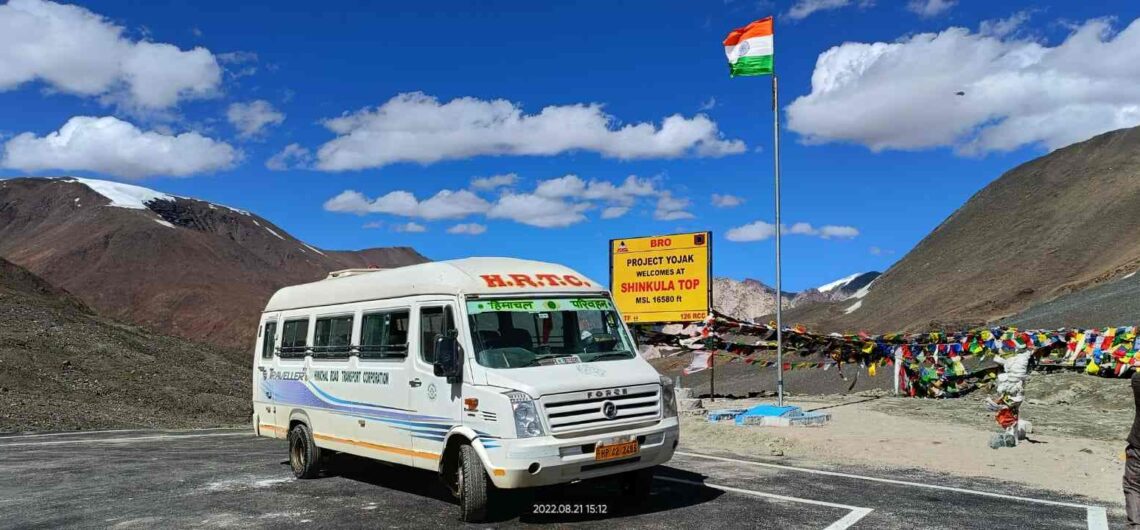
Synopsis: Keylong-Padum bus service is going to become reality very soon as HRTC has conducted a successful trial on this route. The plan is to run the bus on Rewalsar-Kullu-Manali-Keylong-Darcha-Padum route. Keylong-Padum bus service will help in tourism promotion in the region. Himachal Roads Transport Corporation (HRTC), which operates buses on the country's longest and highest route between Delhi and Leh, will soon start a bus service between Padum in Kargil district's Zanskar valley and Keylong and Manali in Himachal Pradesh. The bus service, depending on demand, will be operated from Rewalsar in Himachal’s Mandi district. HRTC has successfully conducted a trial run of a 29-seater mini bus between Lahaul-Spiti district’s headquarter Keylong and Zanskar’s headquarter Padum. First of its kind, the bus service will start immediately after completing the permit related formalities. Initially the bus may run on Keylong-Padum route but the plan is to run the bus on Rewalsar-Padum route. Anshit Sharma, HRTC regional manager at Keylong, was quoted as saying: “The trial run has been successful. Once we complete all the formalities, the bus service will be launched immediately. Initially we plan to run only one bus, but if passenger load increases, we may increase the buses. The route permit is between Rewalsar and Padum. We are hoping for the success of the bus service.” Zanskar being a Buddhist dominated valley, the residents have cultural and religious relations with Himachal, especially Lahaul-Spiti district and Rewalsar in Mandi district. Earlier, people of Zanskar used to enter Himachal after many days of hard trekking via Shinku-la pass or after three to four days long road journey via Kargil, Leh and Sarchu. Now the journey via 16,580ft high Shinku-la will be completed in just one day. The distance between Padum and Keylong via traditional road through Kargil and Leh is
Synopsis: Keylong-Padum bus service is going to become reality very soon as HRTC has conducted a successful trial on this route. The plan is to run the bus on Rewalsar-Kullu-Manali-Keylong-Darcha-Padum route. Keylong-Padum bus service will help in tourism promotion in the region. Himachal Roads Transport Corporation (HRTC), which operates buses on the country’s longest and
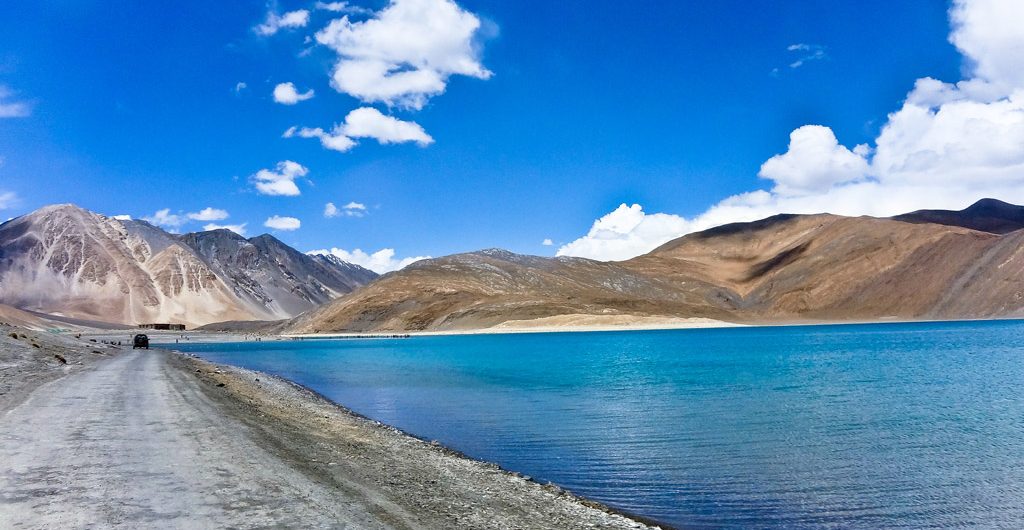
Ladakh—the "Land of High Passes"—is a dream destination where snow-capped peaks, turquoise lakes, ancient monasteries, and star-studded skies create a paradise unlike any other. Yet, this untouched beauty comes with its own set of challenges. Ladakh's breathtaking landscapes - from the sapphire waters of Pangong Lake to the golden dunes of Nubra Valley - create unforgettable memories. However, the region's remote beauty comes with infrastructure limitations that smart travelers prepare for. At Discover Leh Ladakh, we believe transparency about these challenges helps visitors enjoy their journey while respecting local realities. Understanding Ladakh's Electricity Situation Power Availability Across Key Destinations Pangong Lake Area: No grid electricity available Solar-powered lighting typically 7 PM-11 PM only Heating/hot water dependent on generator schedules Many camps use solar-charged batteries for limited power Tso Moriri & Hanle: Morning (6-9 AM) and evening (6-11 PM) power windows Complete daytime blackouts common Flashlights/headlamps essential for nighttime mobility Nubra Valley: Intermittent grid power with frequent cuts Better infrastructure than Pangong but unreliable Solar backups at most quality hotels *Pro Tip: Carry power banks (we recommend 20,000mAh minimum) and download offline maps/music before leaving Leh.* The Water Reality in High-Altitude Desert Drinking Water Challenges Pangong's Paradox: One of world's highest saltwater lake (water undrinkable) All drinking water transported from far away Winter freezing reduces supply further General Water Conservation Rules: Showers often limited to a few minutes Running tap water unavailable at many camps/cottages Bucket bathing systems in remote areas Smart Traveller Strategies: Carry reusable water bottles Pack water purification tablets as backup (Mostly not required) Accept that "Ladakh pressure" means weak shower flow at some places like Pangong How We Minimize Discomforts At Discover Leh Ladakh, we've developed solutions to maximize your comfort: For Electricity: ✔ Properties with upgraded solar systems or power generator sets (supply may be limited to few hours). ✔
Ladakh—the “Land of High Passes”—is a dream destination where snow-capped peaks, turquoise lakes, ancient monasteries, and star-studded skies create a paradise unlike any other. Yet, this untouched beauty comes with its own set of challenges. Ladakh’s breathtaking landscapes – from the sapphire waters of Pangong Lake to the golden dunes of Nubra Valley – create unforgettable memories. However, the