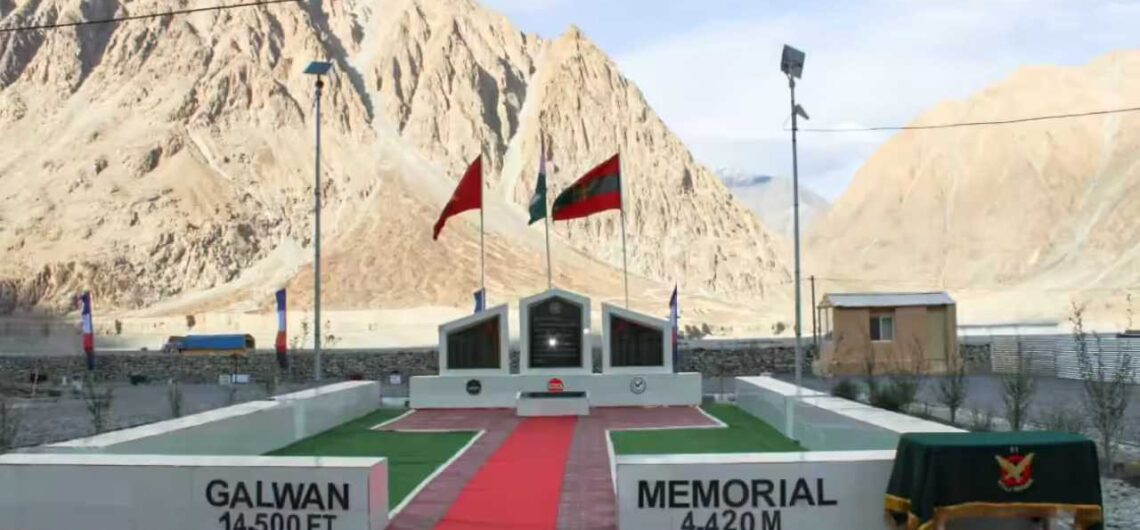
Ladakh, the “Land of High Passes,” is a land of stunning landscapes, snow-capped peaks, ancient monasteries, and serene high-altitude valleys. Among its many breathtaking regions lies Galwan Valley, a place of immense natural beauty as well as historical and geopolitical significance. While it has been in the news in recent years due to India-China border tensions, Galwan Valley is much more than a conflict zone—it is an important geographical landmark with rich history, culture, and unparalleled Himalayan scenery.
In this article, we will explore the location, history, geographical features, significance, travel information, and FAQs about Galwan Valley in Ladakh, making it a comprehensive guide for researchers, travelers, and enthusiasts of Himalayan regions.
Location of Galwan Valley
Galwan Valley is situated in the Union Territory of Ladakh, in the eastern part of the region, close to the Line of Actual Control (LAC) with China. The valley lies at an altitude of over 14,000 feet (4,300 meters) above sea level and is formed by the Galwan River, which flows westwards into the Shyok River near Shyok village in Ladakh.
It is located between two other important regions: Aksai Chin (occupied by China but claimed by India) and the Shyok River valley in Ladakh. The area is remote, rugged, and sparsely populated, with military significance due to its proximity to the border.
The main road to Galwan valley starts from Shyok village (on Pangong-Durbuk-Nubra valley road) and connects Daulat Beg Oldi, about 235km from Shyok. Galwan is about 105km from Shyok.
Most Popular Ladakh Tours


6 Nights 7 Days Leh Ladakh Tour Package

Complete Ladakh with Hanle and Siachen (10 nights 11 days)

Kashmir and Ladakh Sightseeing Package - 10 Nights 11 Days

Leh Ladakh Tour Package with Hanle and Umling la pass (8 days)

Leh Ladakh Package for 9 Nights and 10 Days

Leh Ladakh Winter Tour Package for 5 Nights 6 Days

Leh Ladakh Luxury Tour Package (6 Nights 7 Days)


Leh Ladakh Winter Tour Package (6 Nights 7 Days)

Delhi - Manali - Leh Ladakh - Srinagar Jeep Safari (Road Trip)

Ladakh Package for 8 Nights and 9 Days


Manali-Shinkula pass- Gonbo Rangjon Tour Package from Delhi

Ladakh Package for 10 Nights and 11 Days
Delhi Manali Ladakh Package for 8 Nights and 9 Days

Srinagar Ladakh Manali Delhi Jeep Safari (10 Nights 11 Days)

Ladakh Package for 3 nights and 4 days


Delhi Manali Leh Srinagar Delhi Jeep Safari - 15 Days

Zanskar Valley with Leh Ladakh Tour Package for 11 Days

Zanskar Valley Tour Package from Delhi (7 Nights 8 Days)

Ladakh Package for 4 Nights and 5 Days with Nubra and Pangong

Ladakh Package for 4 Nights and 5 Days

Jammu - Srinagar -Ladakh -Manali -Delhi Jeep Safari

Ladakh Package for 7 Nights and 8 Days
Srinagar Leh Ladakh Manali Delhi Jeep Safari (11 Days)
Srinagar Ladakh Srinagar Package for 8 Nights 9 Days


Srinagar Leh Ladakh Srinagar Package for 8 Nights 9 Days

Delhi Manali Ladakh Manali Delhi Jeep Safari Package

Zanskar Valley Tour Package with Phugtal Monastery

Leh Ladakh Tour Package from Jammu for 8 nights 9 days

Srinagar - Ladakh - Srinagar Jeep Safari (Road Trip)

Leh Ladakh Tour Package from Manali (11 Nights 12 Days)

Leh Tour Package for 5 Nights 6 Days

6 nights 7 days Leh Ladakh Tour Package with Tso Moriri

Kargil Tour Package with Nubra and Pangong Lake

Zanskar Valley Tour Package from Manali (with Leh Ladakh)

Leh Manali Delhi Jeep Safari | Leh to Manali by Road

Nubra Valley and Pangong Lake Tour Package (5 Nights 6 Days)

Amritsar Manali Leh Bike Tour


Complete Leh Ladakh Tour Package from Srinagar

Srinagar - Ladakh Jeep Safari/Road trip - 8 Days

Pangong Lake Tour Package in Leh Ladakh


Manali Ladakh Manali Road Trip Package

Manali Leh Bike Tour (7 Days)

Manali Leh Ladakh Manali Bike Tour (12 Days)

Leh Srinagar Road Trip Package

5 Star Luxury Hotel Leh Ladakh Tour Package (5 Nights 6 Days)

2 nights 3 days leh ladakh tour package

Ladakh Tour Package with Mig La Pass (8 Nights 9 Days)

Delhi-Manali- Leh Ladakh -Zanskar- Delhi Tour Package by Road


Complete Zanskar Valley Tour Package from Leh (8 Nights 9 Days)

Budget Leh Ladakh Tour Package (5 Nights 6 Days)

4 Nights 5 Days Leh Ladakh Winter Tour Package

Ladakh with Kashmir Sightseeing Tour Package (11N 12D)

Leh Ladakh Photography Tour Package for 8 Nights 9 Days

7 Nights 8 Days Leh Ladakh Winter Tour Package
Main Attractions in Galwan Valley
The Galwan Valley is full of natural beauty with beautiful river, water streams, snow-capped peaks, dramatic valleys and landscapes, wildlife and much more. However, Tarsing Karmo Monastery, an ancient gompa built under a huge rock, Galwan War Memorial, ancient silk route and ruins of mud house that housed office for tax collection from users of silk route are few more attractions. Salman Khan starrer Bollywood movie Battle of Galwan is also expected to create more tourist attractions.
The construction of Galwan War Memorial at altitude of 14,500ft had completed in June 2025 and will be thrown open for tourists.

The Galwan River
The Galwan River, after which the valley is named, originates in the high mountains of Aksai Chin and flows westwards to meet the Shyok River. It is a relatively small river compared to the Indus or Shyok, but its valley acts as a natural corridor through the barren mountains.
The river cuts through dramatic gorges, rocky cliffs, and rugged landscapes, making the valley visually striking yet challenging for human habitation.
Daulat Beg Oldi
Daulat Beg Oldi (DBO) further beyond Galwan Valley on Durbuk-Shyok-Galwan-DBO road, is also planned to be open for tourists. DBO is a strategically significant military outpost in the Ladakh region of India, located at an altitude of 16,614 feet near the Line of Actual Control (LAC) with China.
Daulat Beg Oldi is accessible by Indian Army both by road and by flight. The road to DBO starts from Shyok village near Durbuk village. DBO is about 250 km from Durbuk village (DSDBO road) and about 235 KM from Shyok village. DBO has one of the highest airstrips (advanced landing ground) in the world and plays a crucial role in India’s defense operations due to its proximity to the Karakoram Pass.
History of Galwan Valley
Early Exploration
The valley is named after Ghulam Rasool Galwan, a Ladakhi explorer and caravan guide of the late 19th and early 20th centuries. He assisted several European and British expeditions in Central Asia, Tibet, and Ladakh. Due to his contributions, the valley was named in his honor, making Galwan Valley one of the few Himalayan places named after a local Ladakhi explorer.
His autobiography, Servant of Sahibs (published in 1923), provides fascinating insights into the life of caravan guides, trade routes, and the Himalayan frontier of that era.
Strategic Significance
Due to its location near the LAC between India and China, Galwan Valley has been strategically important for centuries. The rugged terrain makes it a natural defense barrier, and its river valley serves as a key route connecting various Himalayan corridors.
Galwan Valley in Recent News
Galwan Valley came into the international spotlight in June 2020, when it was the site of a violent clash between Indian and Chinese troops. This incident, one of the most serious in decades, highlighted the disputed nature of the India-China boundary in Ladakh.
While the valley has always been geopolitically significant, the 2020 conflict made it a symbol of India’s defense, sovereignty, and resilience in protecting its Himalayan frontiers. Since then, Galwan Valley has remained under restricted access, with the Indian Army maintaining a strong presence to safeguard the region.
Popular Leh Ladakh Tour Packages
5 Star Luxury Hotel Leh Ladakh Tour Package (5 Nights 6 Days)
Delhi – Manali – Leh Ladakh – Srinagar Jeep Safari (Road Trip)
Ladakh Package for 4 Nights and 5 Days with Nubra and Pangong
Leh Ladakh Tour Package with Hanle and Umling la pass (8 days)
Geography and Climate of Galwan Valley
-
Altitude: ~14,000–17,000 feet (4,300–5,200 meters)
-
Terrain: Rugged, barren mountains with deep gorges and narrow passages.
-
Climate: Extremely cold desert climate, with very little rainfall.
-
Summer (June–August): Day temperatures may reach 10–20°C, nights remain below 5°C.
-
Winter (October–March): Harsh winters with temperatures dropping to –25°C or lower.
-
-
Vegetation: Sparse; only hardy grasses, shrubs, and desert flora survive.
-
Wildlife: Himalayan marmots, kiangs (wild asses), and migratory birds can sometimes be spotted.

Can Tourists Visit Galwan Valley?
The Ministry of Defence has planned to open Galwan valley, Daulat Beg Oldie and other border regions for tourism. However, currently (on June 5) Galwan Valley is not open for tourism and is expected to open in 2026 after official notification. Access is strictly restricted to the Indian Army and security forces.
However, tourists visiting Ladakh can explore several nearby valleys and attractions, such as:
-
Shyok Valley
-
Nubra Valley (Diskit, Hunder, Turtuk, Siachen Base Camp)
While Galwan itself is off-limits, its surrounding region offers stunning Himalayan landscapes, cultural experiences, and adventure opportunities. Galwan Valley is expected to open for civilians, soon, but we shall have to wait for little more time.
Importance of Galwan Valley
-
Geopolitical Significance – As part of the India-China boundary dispute, Galwan Valley is of great strategic importance.
-
Historical Legacy – Named after Ghulam Rasool Galwan, the valley carries the legacy of Ladakh’s role in trans-Himalayan trade and exploration.
-
Natural Beauty – Rugged yet breathtaking, the valley represents the raw beauty of Ladakh’s high-altitude deserts.
-
Scientific & Environmental Relevance – Its unique ecology, high-altitude conditions, and river system make it an area of interest for geologists and environmentalists.
Battle of Galwan Movie and Tourism in Ladakh
Battle of Galwan, a Bollywood movie inspired by the 2020 Galwan Valley clash between Indian and Chinese troops, has generated a lot of attention nationwide. While the film, with Salman Khan in lead role, focuses on the bravery and sacrifice of Indian soldiers, it is also expected to bring Galwan Valley and Ladakh into the limelight, showcasing the breathtaking landscapes of the region.
Tourism experts believe that movies like Battle of Galwan can indirectly promote Ladakh as a travel destination, much like 3 Idiots made Pangong Lake a must-visit spot for tourists. Even though Galwan Valley itself is not open for tourism due to its sensitive border location, the film is expected to spark interest in Ladakh’s culture, landscapes, and nearby attractions.
By highlighting the valley’s rugged beauty and its place in India’s history, the movie may encourage more travelers to explore safe and accessible parts of Ladakh, thereby contributing to the region’s economy and tourism growth.
Travel Alternatives for Adventure Seekers
Since Galwan Valley itself is restricted for now, here are some alternative valleys and routes in Ladakh that give you a similar sense of adventure:
-
Changthang Plateau – Home to Tso Moriri, Tso Kar, Chilling Tso, and Ryul Tso lakes.
-
Zanskar Valley – Famous for monasteries, rivers, and the Chadar Trek.
-
Hanle – Known for its observatory and stargazing opportunities.
-
Nubra Valley – Famous for sand dunes, monasteries, and the double-humped Bactrian camels.
These areas are accessible to tourists with valid Inner Line Permits (ILPs) or Protected Area Permits (PAP), which can be obtained online or DC office in Leh.
Best Time to Visit Ladakh (Including Regions Near Galwan Valley)
-
May to September: Best months for travel, as roads remain open and weather is relatively pleasant.
-
November to Mid-April: Harsh winter, some routes are closed due to heavy snow and extreme cold.
Since Galwan itself cannot be visited, you can plan your Ladakh trip during the summer months to explore its neighboring attractions.
Tips for Travelers to Ladakh
-
Acclimatization – Spend at least 2 days in Leh before traveling to higher altitudes.
-
Health Precautions – Carry AMS medicines (Diamox), drink water, and avoid exertion.
-
Warm Clothing – Even in summer, nights are cold, so layered woolens are necessary.
-
Permits – Carry Inner Line Permits to visit all the places.
-
Cash & Connectivity – ATMs are limited, and only BSNL, Jio, Airtel postpaid work in remote areas. Carry enough cash and inform family in advance.
Galwan Valley in Ladakh is more than just a name in the headlines—it is a place that reflects the history, geography, and strategic importance of India’s northern frontier. While tourists cannot currently visit the valley due to security restrictions, its legacy as the homeland of Ladakhi explorer Ghulam Rasool Galwan and its role in the India-China border landscape make it an important part of Ladakh’s identity.
For travellers, nearby regions such as Shyok Valley, Nubra, Pangong, and Changthang provide equally thrilling adventures and spectacular natural beauty. Galwan Valley and nearby areas which are expected to open soon for tourists will definitely become tourist hotspots. As Ladakh continues to attract explorers from across the world, Galwan Valley remains a symbol of resilience, history, and the unyielding spirit of the Himalayas.

Comments