When we talk about Ladakh, the first images that come to mind are of majestic monasteries, high mountain passes, and the famous lakes like Pangong Tso and Tso Moriri. But Ladakh is home to several lesser-known high-altitude lakes that remain untouched by mass tourism, and one such breathtaking destination is Chilling Tso Lake at altitude of 16,430ft from sea level. Nestled in the remote Changthang region of southeastern Ladakh, Chilling Tso (also spelled Tsokar Chilling) is a small but stunningly beautiful lake that rewards travelers with solitude, pristine landscapes, and surreal views. This beautiful lake along with Ryul Tso lake (or Kyun Tso lake) is now easily accessible by newly built Hanle-Chumar-Tsomoriri road. Chilling Tso is about 4 sqkm lake and is higher than Pangong and Tso Moriri lakes. The lake mostly remains frozen from November to April due to altitude and extreme cold in the area. For those who love exploring offbeat Ladakh, away from the crowded tourist circuits, Chilling Tso is a dream come true. This article brings you a detailed travel guide to Chilling Tso Lake, Ladakh—covering its location, history, travel routes, best time to visit, permits, nearby attractions, and essential travel tips. Location of Chilling Tso Lake Chilling Tso is located in the Changthang plateau, close to the Indo–China border, at an altitude of about 5,010 meters (16,430 ft) above sea level. It lies in the southeastern corner of Ladakh, between Nyoma and Hanle, two of the most famous remote settlements in the region. As Border Roads Organisation (BRO) has built Hanle-Chumar road via Salsa La pass that further connects to Tso Moriri, this road also connects the twin lakes of Chilling Tso Lake and Ryul Tso Lake (Kyun Tso Lake). This road is now open for tourists. The lake is relatively small compared to Pangong or
When we talk about Ladakh, the first images that come to mind are of majestic monasteries, high mountain passes, and the famous lakes like Pangong Tso and Tso Moriri. But Ladakh is home to several lesser-known high-altitude lakes that remain untouched by mass tourism, and one such breathtaking destination is Chilling Tso Lake at altitude
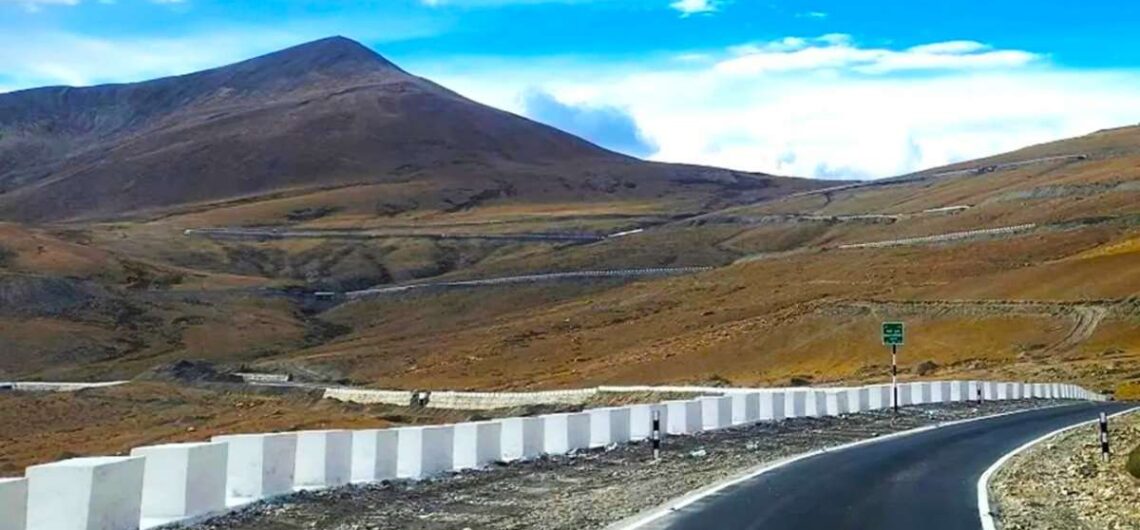
The 91-km-long Hanle-Chumar road has been thrown open for tourists. Chumar (Chumur), a nomadic village and a strategic point for Indian Army, is very close to India-China border. Tourists can now travel from Hanle to Tso Moriri lake via Chumar and Salsa La pass. This new road journey through the beautiful landscapes will become a new tourist attraction. The Border Roads Organisation (BRO) has completed the construction of this road and the road is now black topped. The road starting from Hanle passes through Salsa La pass, Ryul Tso lake, Chilling Tso Lake, and Chumar (Chumur) before reaching Tso Moriri lake. According to Indian Army, "A 91 km road connecting Hanle to the border village of Chumar (Chumur) constructed by the Border Roads Organisation has been opened for the public in Ladakh. The route traverses extreme high altitudes from 14,500 to 17,200 feet, including the high Salsa La Pass." It further states that the road while providing strategic connectivity for the Armed Forces along the borders, will also facilitate local connectivity and tourism in the region by connecting attractions including Hanle Observatory, Kyun Tso Lake, Chilling Tso Lake and onward to Tso Moriri. "The road stands as a significant achievement in strategic infrastructure development, enhancing operational readiness, promoting tourism and boosting socio-economic growth in Ladakh’s remote areas." HANLE–CHUMAR ROAD OPENS FOR THE PUBLIC A 91 km road connecting Hanle to the border village of Chumar constructed by #ProjectHimank of the Border Roads Organisation, #BRO has been opened for the Public in Ladakh. The route traverses extreme high altitudes from 14,500 to 17,200… pic.twitter.com/C9uNfLAiBg — ADG PI - INDIAN ARMY (@adgpi) September 23, 2025 Alternative connectivity between Hanle and Tso Moriri This road has provided alternate connectivity to both Tso Moriri lake and Hanle. Now people, including tourists can travel from
The 91-km-long Hanle-Chumar road has been thrown open for tourists. Chumar (Chumur), a nomadic village and a strategic point for Indian Army, is very close to India-China border. Tourists can now travel from Hanle to Tso Moriri lake via Chumar and Salsa La pass. This new road journey through the beautiful landscapes will become a
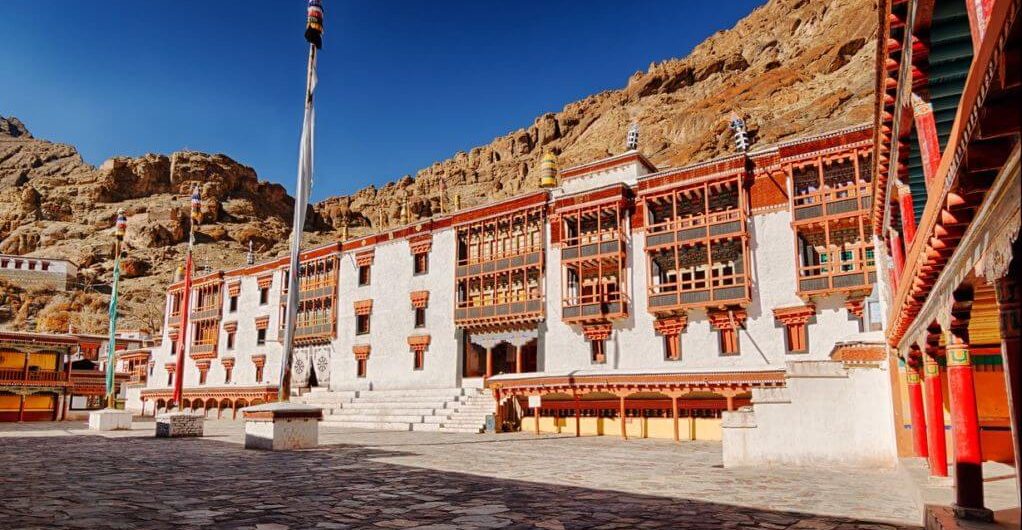
Hemis monastery (gompa) is a Buddhist monastery of Drukpa lineage of Buddhism and is located in Hemis village of Ladakh, about 45 km from Leh. The monastery was built before 11th century but it was re-established in 1672 by the king of Ladakh Sengge Namgyal. An annual Hemis Festival, in honour of Padmasambhava, is observed here in the month of June. Naropa, pupil of yogi Tilopa and teacher of translator Marpa is connected with this monastery. A translation was made by A Grunwedel of Naropa’s biography which was found in Hemis monastery. According to a legend, and Russian journalist Nicolas Notovitch (1894), the Jesus had travelled to the Hemis monastery during his "Lost Years", but this is debatable. Large numbers of tourists visit Hemis every year. The Hemis Festival is dedicated to Lord Padmasambhava venerated as the dance performance at Hemis Monastery representing the reincarnation of Buddha. He is believed to have been born on the 10th day of the fifth month of the Monkey year as predicted by the Buddha Shakyamuni. It is also believed that his life mission was, and remains, to improve the spiritual condition of all living beings. And so on this day, which comes once in a cycle of 12 years, Hemis observes a major extravaganza in his memory. Hemis monastery has a large library that houses ancient religious texts, few of them in unknown languages. Some evidence suggests that the monastery existed even before 11 th century. Naropa is considered the founding father of the Kagyu-lineage of the Himalayan esoteric Buddhism. Hence Hemis is the main seat of the Kagyu lineage of Buddhism. Be it Indian or Foreigner tourists, all throng the Hemis Monastery during their Ladakh visit. Some plans their dedicated visit to Hemis gompa along with Thiksey monastery, but most of the tourists visit
Hemis monastery (gompa) is a Buddhist monastery of Drukpa lineage of Buddhism and is located in Hemis village of Ladakh, about 45 km from Leh. The monastery was built before 11th century but it was re-established in 1672 by the king of Ladakh Sengge Namgyal. An annual Hemis Festival, in honour of Padmasambhava, is observed
Suru Valley: When we think of Ladakh, the first images that come to mind are of rugged mountains, crystal-clear lakes like Pangong and Tso Moriri, or high passes such as Khardung La. However, tucked away in the Kargil district lies one of Ladakh’s most scenic yet lesser-explored regions – Suru Valley. Known for its breathtaking landscapes, fertile fields, snow-capped peaks, and rich cultural heritage, Suru Valley is truly a hidden gem waiting to be discovered. In this detailed travel guide, we will take you through everything you need to know about Suru Valley – its location, best time to visit, how to reach, major attractions, things to do, where to stay, and travel tips. 📍 Where is Suru Valley Located? Suru Valley lies in the Kargil district of Ladakh in the union territory of India. It stretches along the Suru River, a tributary of the mighty Indus, and extends from Kargil town towards the Zanskar region. The valley is about 140 km long, starting from Kargil and reaching up to Pensi La Pass, which connects Suru Valley with Zanskar Valley. The valley is blessed with fertile soil, thanks to the river-fed irrigation system, making it one of the rare green belts in Ladakh. Fields of barley, wheat, peas, and apricots add splashes of color to the otherwise stark Himalayan landscape. 🌄 Why Visit Suru Valley? Unlike the more touristy regions of Leh and Nubra, Suru Valley offers peace, solitude, and raw Himalayan beauty. Travelers who venture into this valley are rewarded with: Majestic views of Nun and Kun peaks, the highest mountains in the Indian Himalayas (7,135 m and 7,077 m respectively). Traditional Ladakhi and Balti villages with warm hospitality. Verdant fields and wildflower meadows contrasting against barren mountains. Glacial rivers and trekking routes into Zanskar and beyond. An opportunity
Suru Valley: When we think of Ladakh, the first images that come to mind are of rugged mountains, crystal-clear lakes like Pangong and Tso Moriri, or high passes such as Khardung La. However, tucked away in the Kargil district lies one of Ladakh’s most scenic yet lesser-explored regions – Suru Valley. Known for its breathtaking
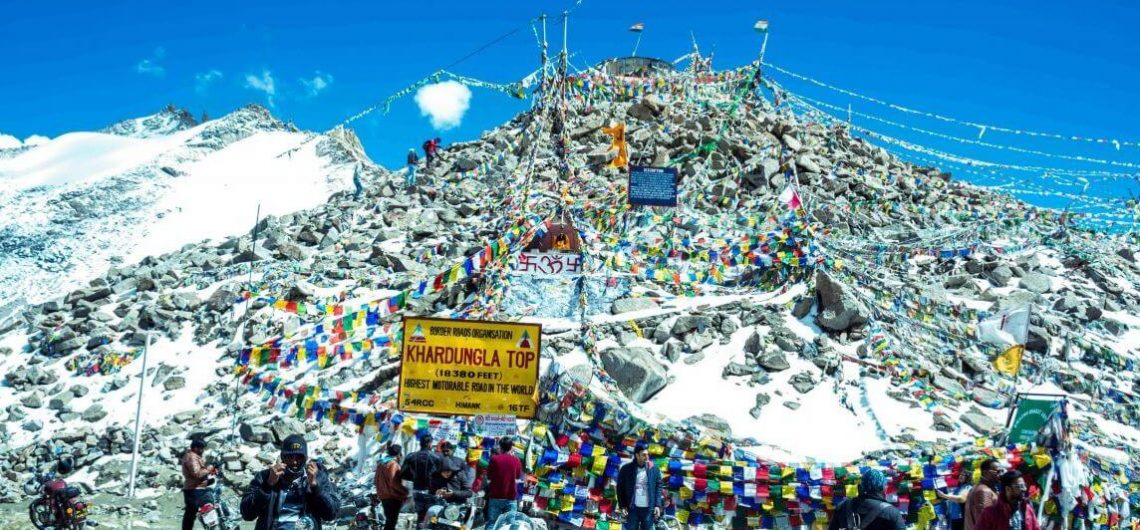
Khardungla pass or Khardung La or Khardongla Pass is some 38km north of Leh city and is reachable after tricky road having high gradient and many hairpin bends. Khardungla pass is at an altitude of 17,582 ft (5,359 m) from mean sea level. Leh-Khardungla pass –Nubra road is known to be amongst a few of the highest roads in the world and the third highest road of India. The highest being Umling La pass at 19,024 ft. Thousands of tourists visit Khardungla pass for its specialty of being so high and mighty, and also to see the snow. A large number of motorbike riders from across the world come to Khardungla pass to set their personal records for riding above 18,000 feet. Indian Army has a post on the Khardung-la top and view from Khardung la is amazing as one can have a wider view of the mountain ranges. Khardungla pass separates Leh valley from Nubra sub-division of Leh district. Depending on conditions, Leh to Khardungla pass is 60 to 90 minutes drive. One needs to have Inner Line Permit/Protected or Restricted Area Permit to visit Khardungla pass. The permit will be checked on either side of the pass at North Pullu and South Pullu. Khardungla pass is also a gateway to Nubra valley and Siachen Glacier, the highest battlefield in the world. Khardung village, after which the pass has been named, lies in the north of the pass in the base. Khardongla pass gained its popularity after claiming to be the highest motorable road of the world few decades back. However, now Ladakh has even higher motorable passes like Umling La Pass in the Eastern Ladakh. Khardung-la pass can be reached anytime of the year. Tourists can get to see snow at Khardungla almost round the year. Being too
Khardungla pass or Khardung La or Khardongla Pass is some 38km north of Leh city and is reachable after tricky road having high gradient and many hairpin bends. Khardungla pass is at an altitude of 17,582 ft (5,359 m) from mean sea level. Leh-Khardungla pass –Nubra road is known to be amongst a few of
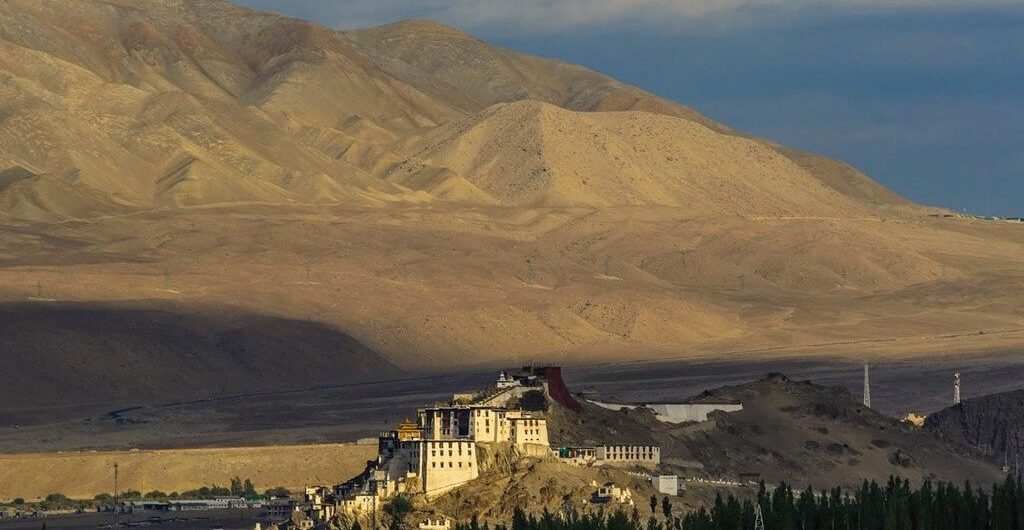
Spituk Monastery is a Buddhist monastery in Western end of Leh in Ladakh on Leh-Kargil-Srinagar highway, about 6 km from the main town. Above the monastery, on the hilltop, is Kali Mata Temple where Goddess Kali is enshrined. The Spituk monastery is close to the Leh airfield and west to Hall of Fame. It offers panoramic view of entire Leh town. One can also see Shanti Stupa, Leh Palace and Namgyal Tsemo Monastery from here. The site of Spituk was blessed by the Arhat Nyimagung. It was founded by Od-de, the elder brother of Lha Lama Changchub Od when he came to Maryul in the 11th Century. He introduced the monastic community. When Lotsewa Rinchen Zangpo (Translator) came to that place he said that an exemplary religious community would arise there and so the monastery was called Spituk (exemplary). During the time of Dharma raja Gragspa Bum-Ide the monastery was restored by Lama Lhawang Lodos and the stainless order of Tsonkhapa was introduced and it has remained intact as such till present. Founded as a Red Hat institution, the Spituk monastery was taken over by the Yellow Hat sect in the 15th century. The monastery contains 100 monks and a giant statue of Kali Mata which is unveiled during the annual Spituk festival. Otherwise the idol remains covered with a cloth. Gustor Festival is held at Spituk from the 27th to 29th day in the eleventh month of the Tibetan calendar every year. While doing sightseeing around Leh, Spiti gompa and Kali Mata temple will come between Hall of Fame and Gurudwara Pathar Sahib. The gompa due to its location in the lower end of the Leh town offers amazing view of entire town along with airport, Leh palace, Shanti Stupa, Tsemo Fort and Khardungla ranges. The monastery is visited
Spituk Monastery is a Buddhist monastery in Western end of Leh in Ladakh on Leh-Kargil-Srinagar highway, about 6 km from the main town. Above the monastery, on the hilltop, is Kali Mata Temple where Goddess Kali is enshrined. The Spituk monastery is close to the Leh airfield and west to Hall of Fame. It offers
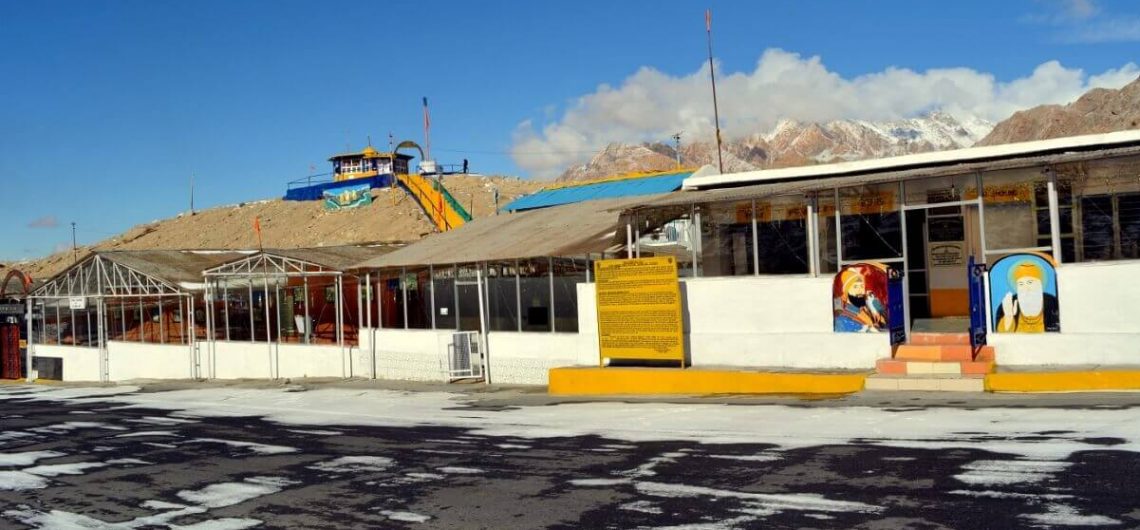
Gurudwara Pathar Sahib, a beautiful Gurudwara constructed in the memory of Guru Nanak ji, founder guru of the Sikh faith, is about 25km from Leh on Leh-Kargil road, just before Magnetic Hill point. Gurudwara Pathar Sahib was built in 1517 to commemorate the visit of Guru Nanak Dev ji to Ladakh. A large number of tourists visit this religious and historic shrine while travelling to Magnetic Hill Point, Sangam Point, Alchi or Kargil. During his lifetime Guru Nanak travelled to many distant places and one such place was Tibet. Guru Nanak is well respected by Tibetan Buddhists who consider him a saint. The Dalai Lama, spiritual leader of Buddhists in Tibet, has confirmed this in his discussions with some Sikh leaders saying that Tibetans revere Guru Nanak as a Buddhist saint under the name of Guru Gompka Maharaj. The Gurudwara Pathar Sahib is one of the must-see places of Ladakh and a large number of tourists visit it round the year. The stone inside gurudwara has an interesting story. In the late 1970s, during the construction of the Leh-Nimu road, a large boulder was found by Lamas in the middle of the road-bed covered with Buddhists prayer flags. The boulder was covered with Buddhist prayer flags, the type of flags that are often found, strung by Buddhist Lamas, along mountain ridges and peaks high in the Himalayas to bless the surrounding countryside. The bulldozer operator tried to push the huge stone to one side, but it refused to move. Gunning the engine he pushed the powerful machine to its limits, but the boulder refused to give way. Suddenly, with a large snap, the blade broke and the work stopped. That night the operator had a dream in which a voice told him not to move the stone. In the morning he narrated his dream
Gurudwara Pathar Sahib, a beautiful Gurudwara constructed in the memory of Guru Nanak ji, founder guru of the Sikh faith, is about 25km from Leh on Leh-Kargil road, just before Magnetic Hill point. Gurudwara Pathar Sahib was built in 1517 to commemorate the visit of Guru Nanak Dev ji to Ladakh. A large number of
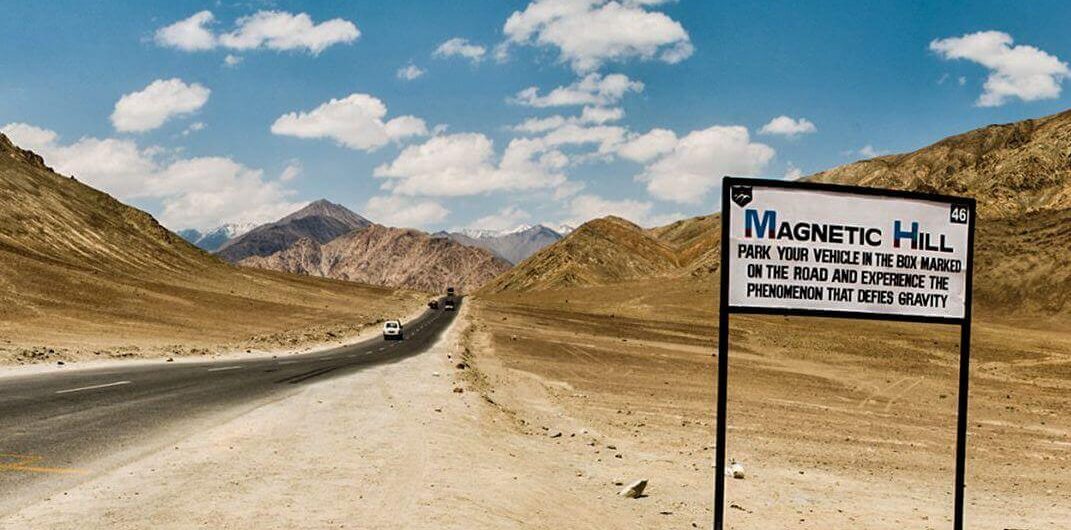
The Magnetic Hill area is located just between Gurudwara Pathar Sahib and Sangam, on the Leh-Srinagar national highway, about 27km from Leh. Tourists throng here to check the truth behind the gravitational pull defying theory. Magnetic Hill or Gravity Hill is nothing but an optical illusion as the geography of the area and surrounding slopes create such an illusion that the uphill road looks like a downhill road. Tourists, mostly those coming from plains become prey to this illusion and are surprised to see their vehicles moving upwards on the road if kept in neutral gear. Border Roads Organization (BRO), which takes care of the maintenance of the highway, has marked the road and installed a display board stating that park your vehicle on the neutral gear inside the marked road and release the brakes to see the car defying gravity. Really, the car or any object rolls uphill (which in reality is downhill) itself but in fact, it appears due to optical illusion. It has led curious people thronging here to see the miracle of nature. Magnetic Hill point has now become a must-visit tourist place in Leh. Tourists generally visit Magnetic Hill along with other local sightseeing places in the surroundings of Leh town which includes Hall of Fame, Spituk, Gurudwara Pathar Sahib, Sangam, Alchi and Likir. You can visit Leh Palace and Shanti Stupa on the same Day. All these places can easily be covered in one full day. Magnetic Hill, Leh Ladakh – The Mysterious Hill That Defies Gravity Magnetic Hill in Leh Ladakh is one of the most intriguing and popular tourist attractions in the region. Located on the Leh–Kargil–Baltic National Highway at an altitude of about 14,000 feet, this unique spot appears to defy the laws of gravity. When a vehicle is left in
The Magnetic Hill area is located just between Gurudwara Pathar Sahib and Sangam, on the Leh-Srinagar national highway, about 27km from Leh. Tourists throng here to check the truth behind the gravitational pull defying theory. Magnetic Hill or Gravity Hill is nothing but an optical illusion as the geography of the area and surrounding slopes
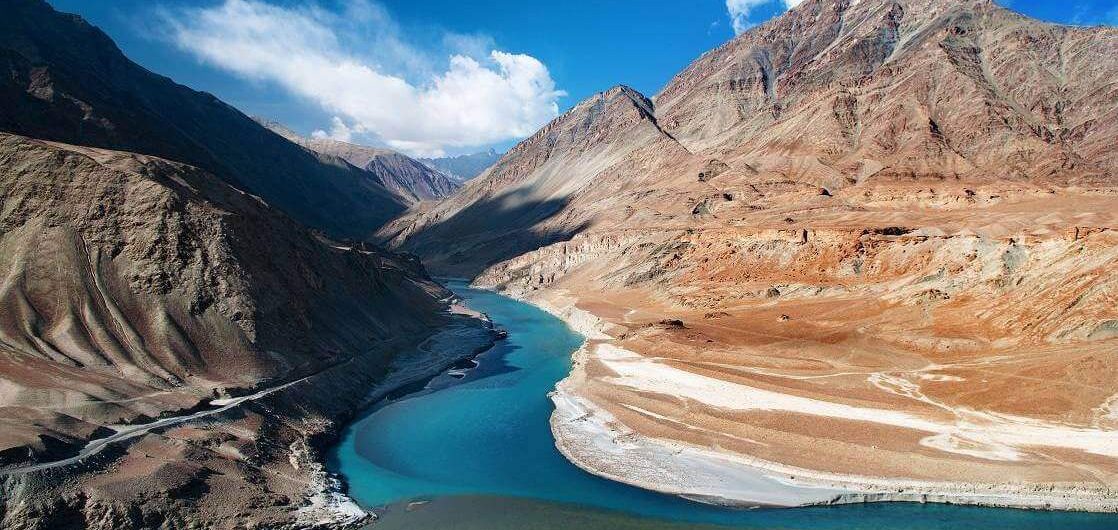
Sangam (confluence), located at Nimmu on Leh-Srinagar highway, is the confluence of Indus (Sindhu) and Zanskar rivers. Zanskar river coming from Zanskar valley of Union Territory of Ladakh meets the Indus river at Nimmu and offers a spectacular view to the visitors. Indus is the lifeline of Ladakh which irrigates the dry land of the valley. A large number of tourists visit Sangam point to enjoy the beauty of nature. Also, this is a river rafting point where adventure enthusiasts come to experience thrill of river rafting. The muddy water of a river meets with blue waters of other at Sangam point and offers a beautiful view. A new highway, Manali - Darcha - Shinkula pass - Padum (Zanskar Valley) - Nimmu, which is under construction, will meet Leh-Srinagar highway at Sangam. Also Read: Discover Leh Ladakh first to reach Zanskar valley by new road via Shinkula Sangam – The Majestic Confluence of Indus and Zanskar Rivers in Leh Ladakh Sangam in Leh Ladakh is one of the most photographed and admired natural wonders of the region, where the mighty Indus River meets the Zanskar River. Located around 30 km from Leh town on the Leh–Srinagar Highway, Sangam is a must-visit attraction for both domestic and foreign tourists. The unique confluence is famous for its distinct color contrast – the emerald-green waters of the Indus blend beautifully with the brownish-blue waters of the Zanskar, creating a stunning visual spectacle. Why Sangam is a Must-Visit in Leh Ladakh Sangam is not only a natural beauty spot but also a symbol of Ladakh’s pristine landscapes and raw Himalayan charm. It is a popular stop on sightseeing trips to Sham Valley, which also includes Magnetic Hill, Gurudwara Pathar Sahib, and Likir Monastery. In summer, the Zanskar River is popular for white-water rafting, offering
Sangam (confluence), located at Nimmu on Leh-Srinagar highway, is the confluence of Indus (Sindhu) and Zanskar rivers. Zanskar river coming from Zanskar valley of Union Territory of Ladakh meets the Indus river at Nimmu and offers a spectacular view to the visitors. Indus is the lifeline of Ladakh which irrigates the dry land of the
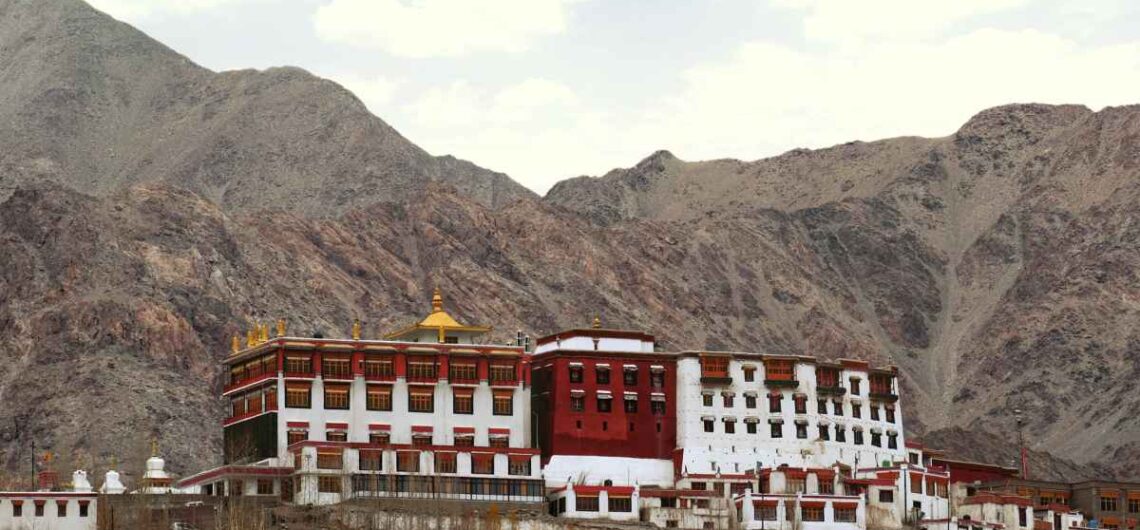
Phyang Monastery, also spelled Phiyang Monastery or Fiang Monastery, is one of the most beautiful and historically important Buddhist monasteries in the Leh district of Ladakh. Situated about 16 km west of Leh town on the Leh–Kargil–Srinagar Highway, this majestic monastery belongs to the Drikung Kagyu sect of Tibetan Buddhism. Perched on a hilltop with stunning views of the surrounding mountains and valleys, Phyang is not just a religious center but also a significant cultural and tourist destination in Ladakh. History of Phyang Monastery Phyang Monastery (Phyang Gompa) was founded in 1515 by Chosje Damma Kunga during the reign of King Jamyang Namgyal. It is said that the site for the monastery was chosen because of a miraculous appearance of protective deities in the area. The monastery has been an important center for the Drikung Kagyu order in Ladakh for over 500 years, playing a major role in preserving Buddhist teachings, art, and culture. The monastery is also known for its collection of ancient murals, thangkas (religious paintings), and statues of Buddha and various Bodhisattvas. One of its most prized possessions is a 900-year-old sacred image of Mahakala, the monastery’s protector deity. Architecture and Attractions The monastery complex is a fine example of traditional Ladakhi and Tibetan architecture. The whitewashed walls, colorful prayer flags fluttering in the mountain breeze, and intricately decorated prayer halls create a peaceful and spiritual atmosphere. Key attractions within Phyang Monastery include: Dukhang (Assembly Hall) – A spacious prayer hall with rows of low wooden seats for monks, decorated with thangkas and murals depicting Buddhist deities and stories from Jataka tales. Museum – Showcasing an impressive collection of weapons, ancient paintings, textiles, and artifacts from different periods of Ladakh’s history. Chortens (Stupas) – Sacred structures surrounding the monastery that house relics and are adorned with colorful
Phyang Monastery, also spelled Phiyang Monastery or Fiang Monastery, is one of the most beautiful and historically important Buddhist monasteries in the Leh district of Ladakh. Situated about 16 km west of Leh town on the Leh–Kargil–Srinagar Highway, this majestic monastery belongs to the Drikung Kagyu sect of Tibetan Buddhism. Perched on a hilltop with