If you are wondering whether Leh Ladakh is open for tourists in winter, the answer is YES. Despite extreme cold weather and road closures, a large number of adventurous travelers now visit Ladakh in winter months to experience its magical frozen landscapes, snowfall, culture, winter photography, and thrilling treks like the Chadar Trek on the frozen Zanskar River. Winter in Ladakh offers a completely different experience compared to summer. From walking on frozen lakes like Pangong Tso and Tso Moriri, witnessing breathtaking winter photography opportunities, to experiencing the raw culture of Ladakh in off-season, winter tourism in Ladakh has grown rapidly in recent years. How to Reach Leh Ladakh in Winters? During winters, both Srinagar–Leh highway and Manali–Leh highway remain closed due to heavy snowfall. However, Ladakh is connected throughout the year by air. Daily flights from Delhi to Leh Airport (Kushok Bakula Rimpochee Airport) ensure smooth connectivity. There are also connecting flights available from Mumbai, Kolkata, Bangalore, Chennai, Goa, and other Indian cities. So, even in the coldest months like December, January, and February, you can easily fly into Leh. Temperature in Leh Ladakh in Winters Ladakh experiences bone-chilling cold in winters. The temperature often drops to -20°C or even lower, especially during January and February. Daytime temperature: Can range between -2°C to -5°C (sometimes slightly warmer on sunny days). Night temperature: Can drop to -15°C in Leh and Nubra, and even below -25°C at high-altitude lakes like Pangong Tso and Tso Moriri. Temperature at Drass can dip below -40°C If you are not too sensitive to cold, Ladakh in winters is a once-in-a-lifetime experience. Winter Tour Packages for Leh Ladakh https://discoverlehladakh.in/winter-leh-ladakh-tour-package-4-days.htm https://discoverlehladakh.in/leh-ladakh-winter-tour-package-for-5-nights-6-days.htm https://discoverlehladakh.in/leh-ladakh-winter-tour-package-7-days.htm Do Hotels Remain Open in Ladakh During Winters? Most hotels in Ladakh remain closed in the winter season because of extreme weather. However, some hotels
If you are wondering whether Leh Ladakh is open for tourists in winter, the answer is YES. Despite extreme cold weather and road closures, a large number of adventurous travelers now visit Ladakh in winter months to experience its magical frozen landscapes, snowfall, culture, winter photography, and thrilling treks like the Chadar Trek on the
When it comes to exploring the raw beauty of the Himalayas, Ladakh in December offers one of the most unique and unforgettable travel experiences. Known as the “Land of High Passes,” Ladakh transforms into a serene winter wonderland in December. With temperatures ranging between –5°C and –30°C, only the most adventurous travelers make their way to Ladakh during this month. If you are someone who wants to escape the tourist crowd and witness the authentic charm of Ladakh in peak winter, December is the perfect time for you. Weather in Ladakh in December December is the peak winter month in Ladakh, with icy winds and freezing nights. Day Temperature: Often hovers close to 0°C and rarely goes above 5°C. Night Temperature: Drops significantly, with Leh and Nubra Valley recording –15°C or lower. High Altitude Areas: Pangong Tso, Tso Moriri, Tsokar, Hanle, and other remote villages experience extreme cold, with temperatures plunging below –20°C or even –25°C. By the end of December, lakes like Pangong Tso and Tso Moriri begin to freeze, and tourists often find themselves walking on the frozen surface of these iconic water bodies. Although many imagine Ladakh as a snowy destination, in reality it snows less in Leh and lower valleys due to the surrounding high mountains that block most clouds. Still, snow can be seen at high passes like Khardung La and Chang La, and occasionally, Leh city and Nubra Valley receive light snowfall as well. Roads and Connectivity in December Traveling to and within Ladakh in December requires some planning, as many roads close due to snow and ice. Leh–Manali Highway: Closed from November to mid-May. Leh–Srinagar Highway: Generally remains closed from December to March due to heavy snowfall around Zoji La Pass. Internal Roads: Roads connecting Leh to Nubra Valley, Pangong Lake, Sham Valley,
When it comes to exploring the raw beauty of the Himalayas, Ladakh in December offers one of the most unique and unforgettable travel experiences. Known as the “Land of High Passes,” Ladakh transforms into a serene winter wonderland in December. With temperatures ranging between –5°C and –30°C, only the most adventurous travelers make their way
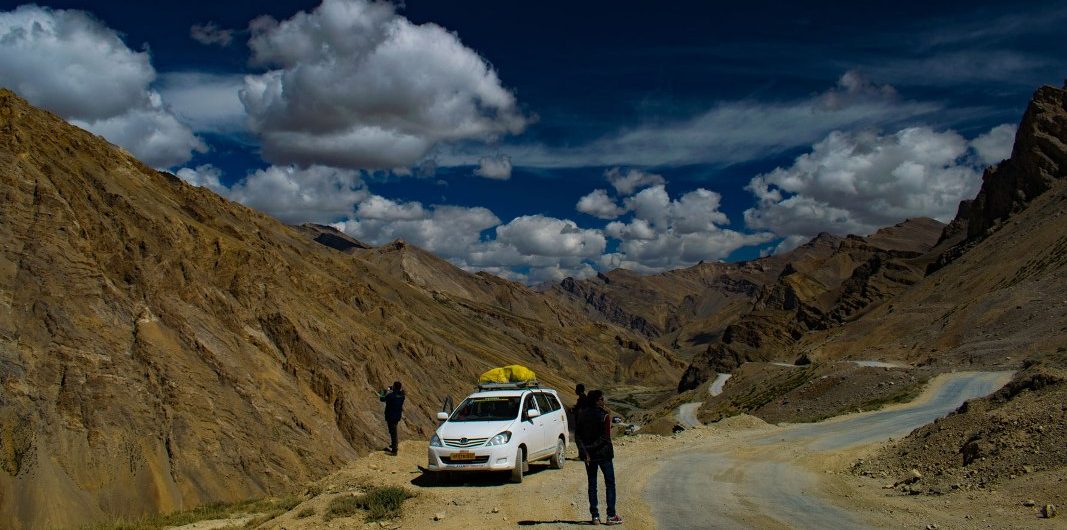
Manali - Leh Ladakh Taxi Service (Rent a cab) Manali Leh-Ladakh Manali - Leh Ladakh One Way Taxi Hire Service at Discounted Rates (Applicable from 5 July to 15 October 2025): Vehicle Type Cost (in Rupees) Toyota Innova 20,000/- Toyota Innova Crysta 22,000/- Xylo 20,000/- Tata Sumo xxx Tempo Traveller 27,000/- Leh - Manali One Way Taxi Hire Service at Discounted Rates (Applicable from 5 July to 30 Sept 2025): Vehicle Type Cost (in Rupees) Toyota Innova 23,000/- Toyota Innova Crysta 25,000/- Xylo 23,000/- Tata Sumo xxx Tempo Traveller 34,000/- Manali - Leh Ladakh One Way Taxi Hire Service at Discounted Rates (Applicable from 5 May to 5 July 2025): Vehicle Type Cost (in Rupees) Toyota Innova 24,000/- Toyota Innova Crysta 26,000/- Xylo 24,000/- Tata Sumo xxx Tempo Traveller 37,000/- Leh - Manali One Way Taxi Hire Service at Discounted Rates (Applicable from 5 May to 5 July 2025): Vehicle Type Cost (in Rupees) Toyota Innova 25,000/- Toyota Innova Crysta 26,500/- Xylo 25,000/- Tata Sumo xxx Tempo Traveller 37,000/- Manali - Padum (Zanskar Valley) Taxi Service (Rent a cab) Manali - Darcha - Padum (Zanskar Valley) One Way Taxi Hire Service at Discounted Rates: Vehicle Type Cost (in Rupees) Toyota Innova 20,000/- Toyota Innova Crysta 21,500/- Xylo 20,000 Tata Sumo xxx Tempo Traveller 26,000/- Padum (Zanskar Valley) - Darcha - Manali One Way Taxi Hire Service at Discounted Rates: Vehicle Type Cost (in Rupees) Toyota Innova 22,000/- Toyota Innova Crysta 24,000/- Xylo 22,000 Tata Sumo xxx Tempo Traveller 31,000/- Note: The operation of taxi service will totally dependent on weather conditions. We shall not be responsible for delay/cancellation in case of landslide/snowfall. Kindly confirm the fresh taxi fare by contacting us as the taxi fare keeps changing due to many technical (legal/permission/taxi union rates) reasons. The taxi fare could be
Manali – Leh Ladakh Taxi Service (Rent a cab) Manali Leh-Ladakh Manali – Leh Ladakh One Way Taxi Hire Service at Discounted Rates (Applicable from 5 July to 15 October 2025): Vehicle Type Cost (in Rupees) Toyota Innova 20,000/- Toyota Innova Crysta 22,000/- Xylo 20,000/- Tata Sumo xxx Tempo Traveller 27,000/- Leh – Manali One
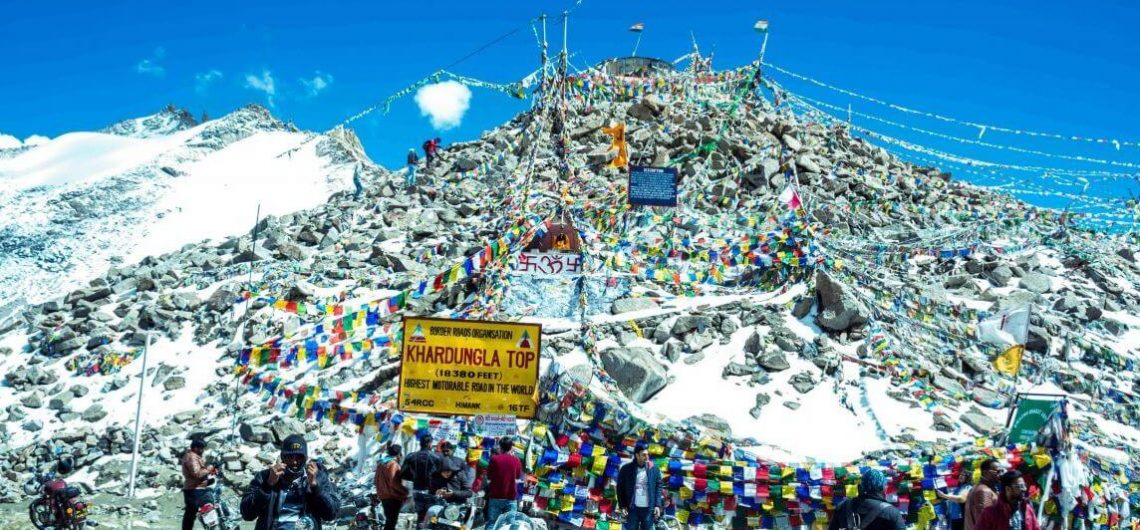
Khardungla pass or Khardung La or Khardongla Pass is some 38km north of Leh city and is reachable after tricky road having high gradient and many hairpin bends. Khardungla pass is at an altitude of 17,582 ft (5,359 m) from mean sea level. Leh-Khardungla pass –Nubra road is known to be amongst a few of the highest roads in the world and the third highest road of India. The highest being Umling La pass at 19,024 ft. Thousands of tourists visit Khardungla pass for its specialty of being so high and mighty, and also to see the snow. A large number of motorbike riders from across the world come to Khardungla pass to set their personal records for riding above 18,000 feet. Indian Army has a post on the Khardung-la top and view from Khardung la is amazing as one can have a wider view of the mountain ranges. Khardungla pass separates Leh valley from Nubra sub-division of Leh district. Depending on conditions, Leh to Khardungla pass is 60 to 90 minutes drive. One needs to have Inner Line Permit/Protected or Restricted Area Permit to visit Khardungla pass. The permit will be checked on either side of the pass at North Pullu and South Pullu. Khardungla pass is also a gateway to Nubra valley and Siachen Glacier, the highest battlefield in the world. Khardung village, after which the pass has been named, lies in the north of the pass in the base. Khardongla pass gained its popularity after claiming to be the highest motorable road of the world few decades back. However, now Ladakh has even higher motorable passes like Umling La Pass in the Eastern Ladakh. Khardung-la pass can be reached anytime of the year. Tourists can get to see snow at Khardungla almost round the year. Being too
Khardungla pass or Khardung La or Khardongla Pass is some 38km north of Leh city and is reachable after tricky road having high gradient and many hairpin bends. Khardungla pass is at an altitude of 17,582 ft (5,359 m) from mean sea level. Leh-Khardungla pass –Nubra road is known to be amongst a few of
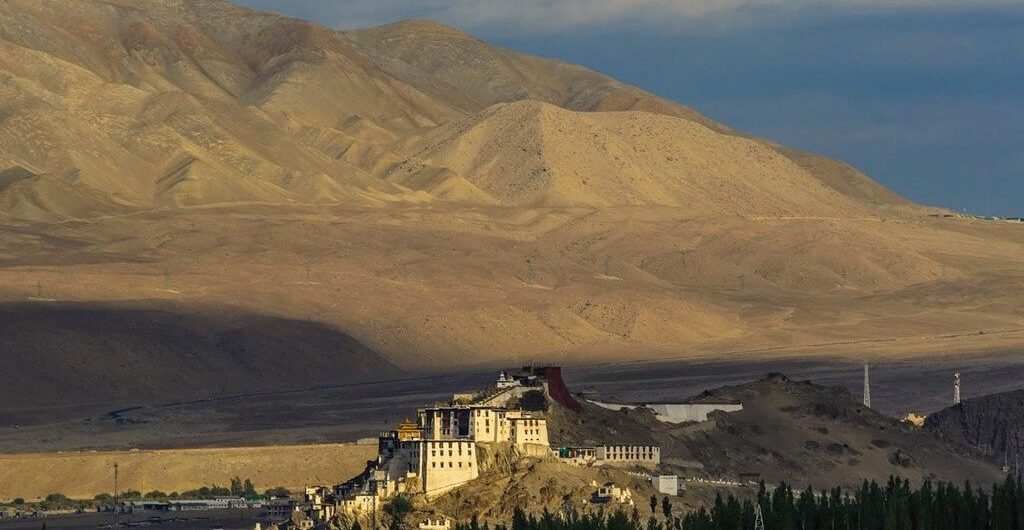
Spituk Monastery is a Buddhist monastery in Western end of Leh in Ladakh on Leh-Kargil-Srinagar highway, about 6 km from the main town. Above the monastery, on the hilltop, is Kali Mata Temple where Goddess Kali is enshrined. The Spituk monastery is close to the Leh airfield and west to Hall of Fame. It offers panoramic view of entire Leh town. One can also see Shanti Stupa, Leh Palace and Namgyal Tsemo Monastery from here. The site of Spituk was blessed by the Arhat Nyimagung. It was founded by Od-de, the elder brother of Lha Lama Changchub Od when he came to Maryul in the 11th Century. He introduced the monastic community. When Lotsewa Rinchen Zangpo (Translator) came to that place he said that an exemplary religious community would arise there and so the monastery was called Spituk (exemplary). During the time of Dharma raja Gragspa Bum-Ide the monastery was restored by Lama Lhawang Lodos and the stainless order of Tsonkhapa was introduced and it has remained intact as such till present. Founded as a Red Hat institution, the Spituk monastery was taken over by the Yellow Hat sect in the 15th century. The monastery contains 100 monks and a giant statue of Kali Mata which is unveiled during the annual Spituk festival. Otherwise the idol remains covered with a cloth. Gustor Festival is held at Spituk from the 27th to 29th day in the eleventh month of the Tibetan calendar every year. While doing sightseeing around Leh, Spiti gompa and Kali Mata temple will come between Hall of Fame and Gurudwara Pathar Sahib. The gompa due to its location in the lower end of the Leh town offers amazing view of entire town along with airport, Leh palace, Shanti Stupa, Tsemo Fort and Khardungla ranges. The monastery is visited
Spituk Monastery is a Buddhist monastery in Western end of Leh in Ladakh on Leh-Kargil-Srinagar highway, about 6 km from the main town. Above the monastery, on the hilltop, is Kali Mata Temple where Goddess Kali is enshrined. The Spituk monastery is close to the Leh airfield and west to Hall of Fame. It offers
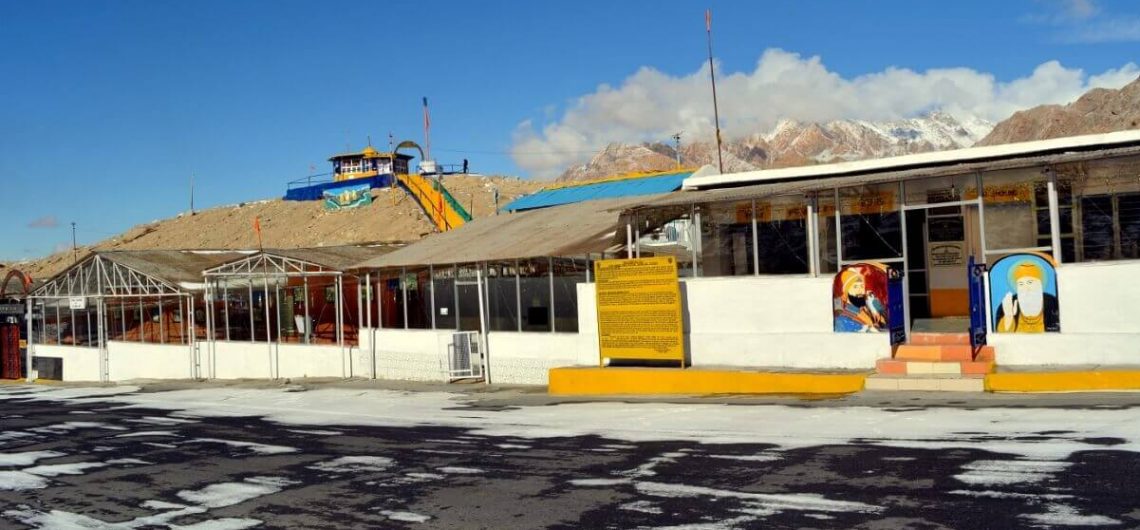
Gurudwara Pathar Sahib, a beautiful Gurudwara constructed in the memory of Guru Nanak ji, founder guru of the Sikh faith, is about 25km from Leh on Leh-Kargil road, just before Magnetic Hill point. Gurudwara Pathar Sahib was built in 1517 to commemorate the visit of Guru Nanak Dev ji to Ladakh. A large number of tourists visit this religious and historic shrine while travelling to Magnetic Hill Point, Sangam Point, Alchi or Kargil. During his lifetime Guru Nanak travelled to many distant places and one such place was Tibet. Guru Nanak is well respected by Tibetan Buddhists who consider him a saint. The Dalai Lama, spiritual leader of Buddhists in Tibet, has confirmed this in his discussions with some Sikh leaders saying that Tibetans revere Guru Nanak as a Buddhist saint under the name of Guru Gompka Maharaj. The Gurudwara Pathar Sahib is one of the must-see places of Ladakh and a large number of tourists visit it round the year. The stone inside gurudwara has an interesting story. In the late 1970s, during the construction of the Leh-Nimu road, a large boulder was found by Lamas in the middle of the road-bed covered with Buddhists prayer flags. The boulder was covered with Buddhist prayer flags, the type of flags that are often found, strung by Buddhist Lamas, along mountain ridges and peaks high in the Himalayas to bless the surrounding countryside. The bulldozer operator tried to push the huge stone to one side, but it refused to move. Gunning the engine he pushed the powerful machine to its limits, but the boulder refused to give way. Suddenly, with a large snap, the blade broke and the work stopped. That night the operator had a dream in which a voice told him not to move the stone. In the morning he narrated his dream
Gurudwara Pathar Sahib, a beautiful Gurudwara constructed in the memory of Guru Nanak ji, founder guru of the Sikh faith, is about 25km from Leh on Leh-Kargil road, just before Magnetic Hill point. Gurudwara Pathar Sahib was built in 1517 to commemorate the visit of Guru Nanak Dev ji to Ladakh. A large number of
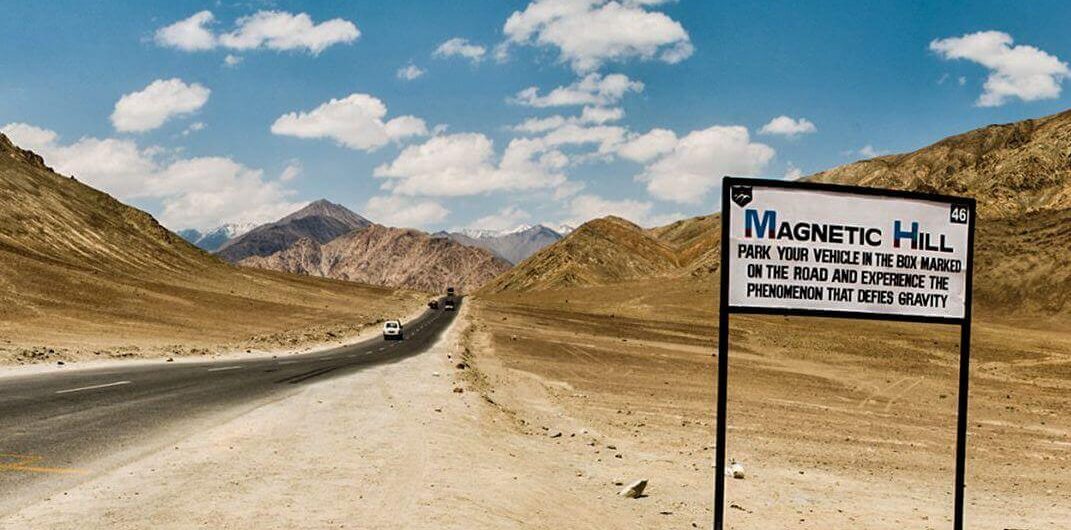
The Magnetic Hill area is located just between Gurudwara Pathar Sahib and Sangam, on the Leh-Srinagar national highway, about 27km from Leh. Tourists throng here to check the truth behind the gravitational pull defying theory. Magnetic Hill or Gravity Hill is nothing but an optical illusion as the geography of the area and surrounding slopes create such an illusion that the uphill road looks like a downhill road. Tourists, mostly those coming from plains become prey to this illusion and are surprised to see their vehicles moving upwards on the road if kept in neutral gear. Border Roads Organization (BRO), which takes care of the maintenance of the highway, has marked the road and installed a display board stating that park your vehicle on the neutral gear inside the marked road and release the brakes to see the car defying gravity. Really, the car or any object rolls uphill (which in reality is downhill) itself but in fact, it appears due to optical illusion. It has led curious people thronging here to see the miracle of nature. Magnetic Hill point has now become a must-visit tourist place in Leh. Tourists generally visit Magnetic Hill along with other local sightseeing places in the surroundings of Leh town which includes Hall of Fame, Spituk, Gurudwara Pathar Sahib, Sangam, Alchi and Likir. You can visit Leh Palace and Shanti Stupa on the same Day. All these places can easily be covered in one full day. Magnetic Hill, Leh Ladakh – The Mysterious Hill That Defies Gravity Magnetic Hill in Leh Ladakh is one of the most intriguing and popular tourist attractions in the region. Located on the Leh–Kargil–Baltic National Highway at an altitude of about 14,000 feet, this unique spot appears to defy the laws of gravity. When a vehicle is left in
The Magnetic Hill area is located just between Gurudwara Pathar Sahib and Sangam, on the Leh-Srinagar national highway, about 27km from Leh. Tourists throng here to check the truth behind the gravitational pull defying theory. Magnetic Hill or Gravity Hill is nothing but an optical illusion as the geography of the area and surrounding slopes
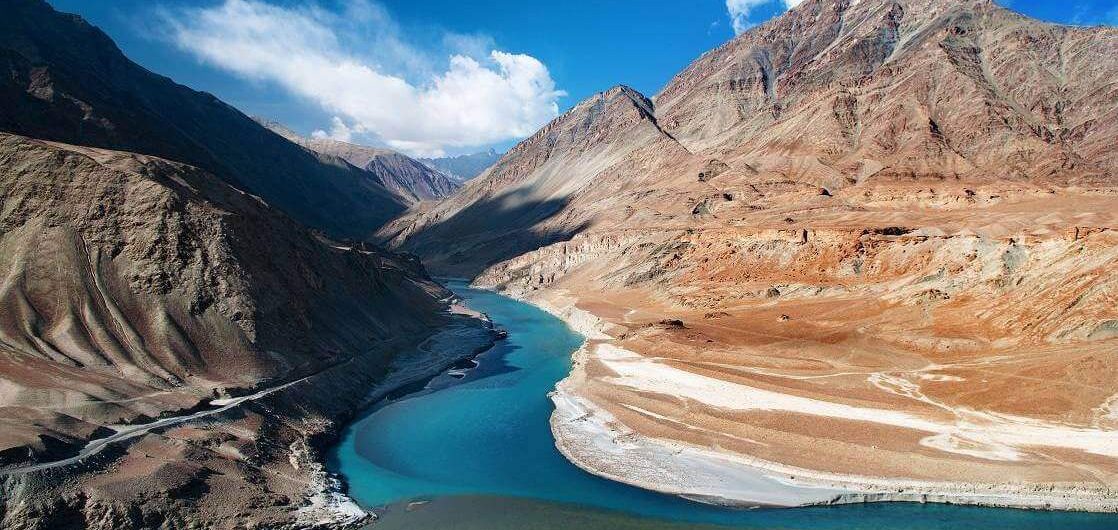
Sangam (confluence), located at Nimmu on Leh-Srinagar highway, is the confluence of Indus (Sindhu) and Zanskar rivers. Zanskar river coming from Zanskar valley of Union Territory of Ladakh meets the Indus river at Nimmu and offers a spectacular view to the visitors. Indus is the lifeline of Ladakh which irrigates the dry land of the valley. A large number of tourists visit Sangam point to enjoy the beauty of nature. Also, this is a river rafting point where adventure enthusiasts come to experience thrill of river rafting. The muddy water of a river meets with blue waters of other at Sangam point and offers a beautiful view. A new highway, Manali - Darcha - Shinkula pass - Padum (Zanskar Valley) - Nimmu, which is under construction, will meet Leh-Srinagar highway at Sangam. Also Read: Discover Leh Ladakh first to reach Zanskar valley by new road via Shinkula Sangam – The Majestic Confluence of Indus and Zanskar Rivers in Leh Ladakh Sangam in Leh Ladakh is one of the most photographed and admired natural wonders of the region, where the mighty Indus River meets the Zanskar River. Located around 30 km from Leh town on the Leh–Srinagar Highway, Sangam is a must-visit attraction for both domestic and foreign tourists. The unique confluence is famous for its distinct color contrast – the emerald-green waters of the Indus blend beautifully with the brownish-blue waters of the Zanskar, creating a stunning visual spectacle. Why Sangam is a Must-Visit in Leh Ladakh Sangam is not only a natural beauty spot but also a symbol of Ladakh’s pristine landscapes and raw Himalayan charm. It is a popular stop on sightseeing trips to Sham Valley, which also includes Magnetic Hill, Gurudwara Pathar Sahib, and Likir Monastery. In summer, the Zanskar River is popular for white-water rafting, offering
Sangam (confluence), located at Nimmu on Leh-Srinagar highway, is the confluence of Indus (Sindhu) and Zanskar rivers. Zanskar river coming from Zanskar valley of Union Territory of Ladakh meets the Indus river at Nimmu and offers a spectacular view to the visitors. Indus is the lifeline of Ladakh which irrigates the dry land of the
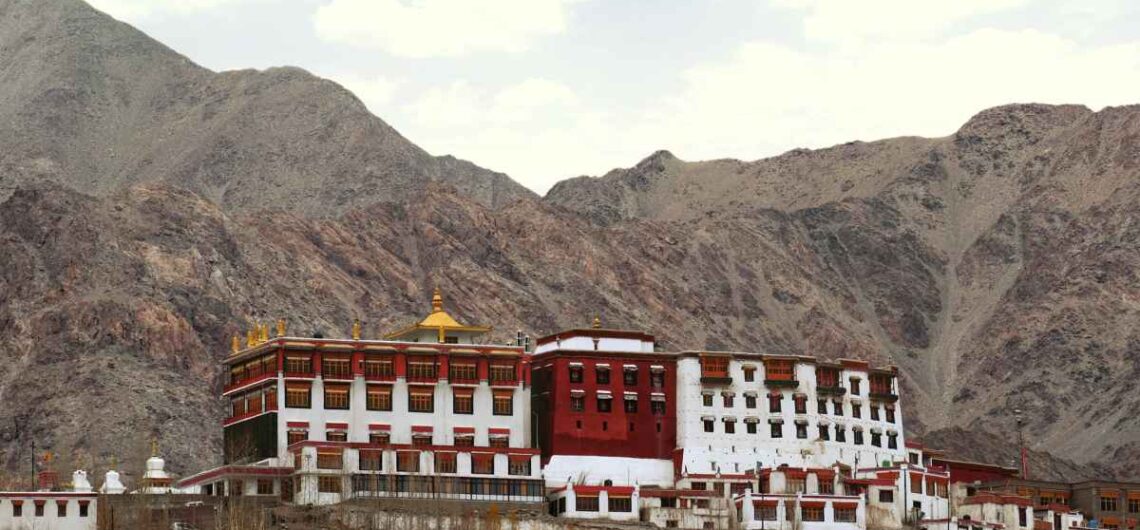
Phyang Monastery, also spelled Phiyang Monastery or Fiang Monastery, is one of the most beautiful and historically important Buddhist monasteries in the Leh district of Ladakh. Situated about 16 km west of Leh town on the Leh–Kargil–Srinagar Highway, this majestic monastery belongs to the Drikung Kagyu sect of Tibetan Buddhism. Perched on a hilltop with stunning views of the surrounding mountains and valleys, Phyang is not just a religious center but also a significant cultural and tourist destination in Ladakh. History of Phyang Monastery Phyang Monastery (Phyang Gompa) was founded in 1515 by Chosje Damma Kunga during the reign of King Jamyang Namgyal. It is said that the site for the monastery was chosen because of a miraculous appearance of protective deities in the area. The monastery has been an important center for the Drikung Kagyu order in Ladakh for over 500 years, playing a major role in preserving Buddhist teachings, art, and culture. The monastery is also known for its collection of ancient murals, thangkas (religious paintings), and statues of Buddha and various Bodhisattvas. One of its most prized possessions is a 900-year-old sacred image of Mahakala, the monastery’s protector deity. Architecture and Attractions The monastery complex is a fine example of traditional Ladakhi and Tibetan architecture. The whitewashed walls, colorful prayer flags fluttering in the mountain breeze, and intricately decorated prayer halls create a peaceful and spiritual atmosphere. Key attractions within Phyang Monastery include: Dukhang (Assembly Hall) – A spacious prayer hall with rows of low wooden seats for monks, decorated with thangkas and murals depicting Buddhist deities and stories from Jataka tales. Museum – Showcasing an impressive collection of weapons, ancient paintings, textiles, and artifacts from different periods of Ladakh’s history. Chortens (Stupas) – Sacred structures surrounding the monastery that house relics and are adorned with colorful
Phyang Monastery, also spelled Phiyang Monastery or Fiang Monastery, is one of the most beautiful and historically important Buddhist monasteries in the Leh district of Ladakh. Situated about 16 km west of Leh town on the Leh–Kargil–Srinagar Highway, this majestic monastery belongs to the Drikung Kagyu sect of Tibetan Buddhism. Perched on a hilltop with
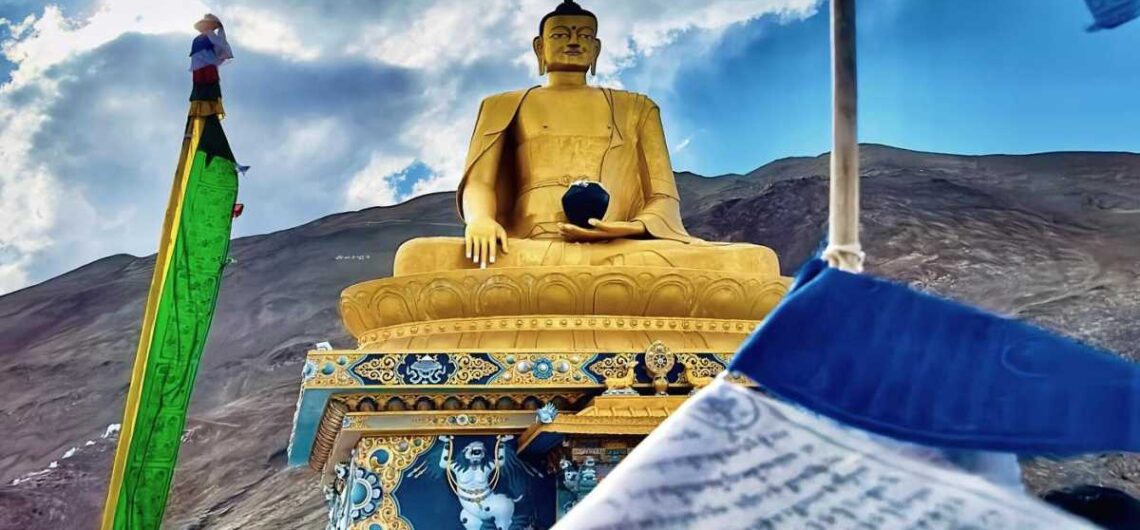
Stakna Monastery is one of the most picturesque monasteries in Ladakh, located about 25 km southeast of Leh on the left bank of the Indus River. Its name, Stakna, literally means “Tiger’s Nose”, derived from the hill it stands on, which resembles the shape of a tiger’s nose. Offering sweeping views of the Indus Valley, snow-clad mountains, and nearby villages, Stakna is not only a spiritual center but also a photographer’s delight and a peaceful getaway for travelers exploring Ladakh. History of Stakna Monastery Stakna Monastery was founded in the late 16th century by Chosje Jamyang Palkar, a Bhutanese scholar and saint. It belongs to the Drugpa (Drukpa) sect of Tibetan Buddhism. The monastery was built with the support of Bhutanese monks and rulers, making it unique as it is one of the few monasteries in Ladakh with Bhutanese architectural and cultural influences. The monastery has played a significant role in spreading the teachings of the Drukpa lineage in Ladakh and continues to be a living center for Buddhist learning, meditation, and monastic life. Location District: Leh, Ladakh, India Distance from Leh: ~25 km Altitude: ~3,500 meters (11,480 ft) Coordinates: On the left bank of the Indus River, along the Leh–Manali Highway What to See at Stakna Monastery 1. Stunning Hilltop Setting Perched atop a rocky hill, the monastery offers panoramic views of the Indus River curving through the valley, flanked by barren mountains and lush green villages. 2. Main Assembly Hall (Dukhang) The prayer hall houses beautiful statues, colorful thangkas (Tibetan Buddhist paintings on cloth), and images of revered Buddhist figures. The atmosphere inside is calm and meditative, often accompanied by the gentle murmur of monks chanting prayers. 3. Statue of Arya Avalokitesvara The monastery’s main idol is a sacred image of Arya Avalokitesvara, the Bodhisattva of Compassion, brought
Stakna Monastery is one of the most picturesque monasteries in Ladakh, located about 25 km southeast of Leh on the left bank of the Indus River. Its name, Stakna, literally means “Tiger’s Nose”, derived from the hill it stands on, which resembles the shape of a tiger’s nose. Offering sweeping views of the Indus Valley,